The Original Laws of Baseball — Primary Source Documents, 1857
Primary Sources · 37 Document Pages · 1857
The Original Laws of Baseball
Thirty-seven primary source pages across three collections — the Convention Laws, Adams' handwritten draft, and the scholarly analysis. Click any page to view it in full resolution.
1857 Baseball Convention · 18 Pages
The Laws as Presented
The complete Laws of Baseball as presented by Daniel Lucius Adams at the 1857 Baseball Convention in New York City. These eighteen pages constitute the foundational document of the modern game — adopted by fourteen clubs without significant amendment.
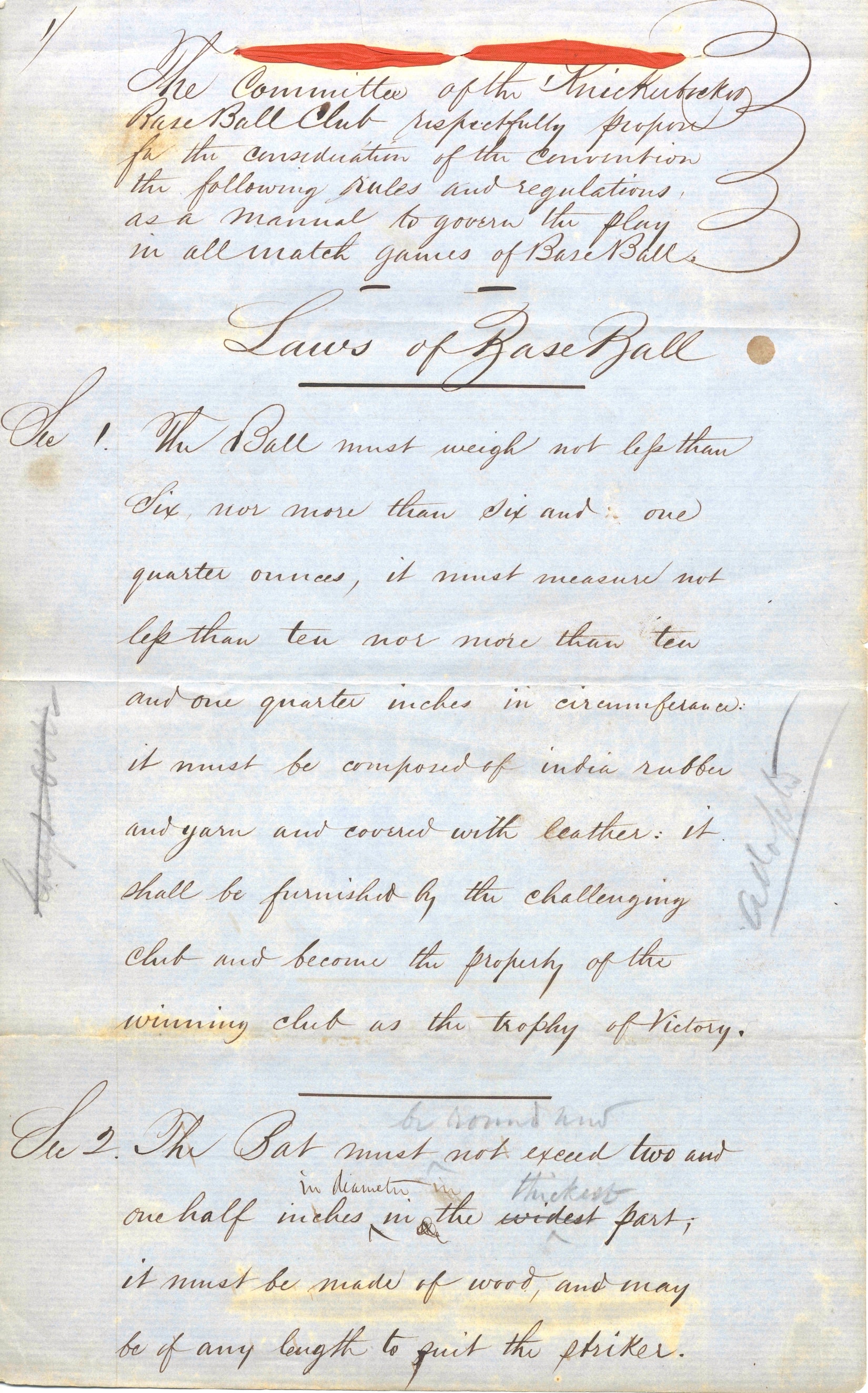
Page 1
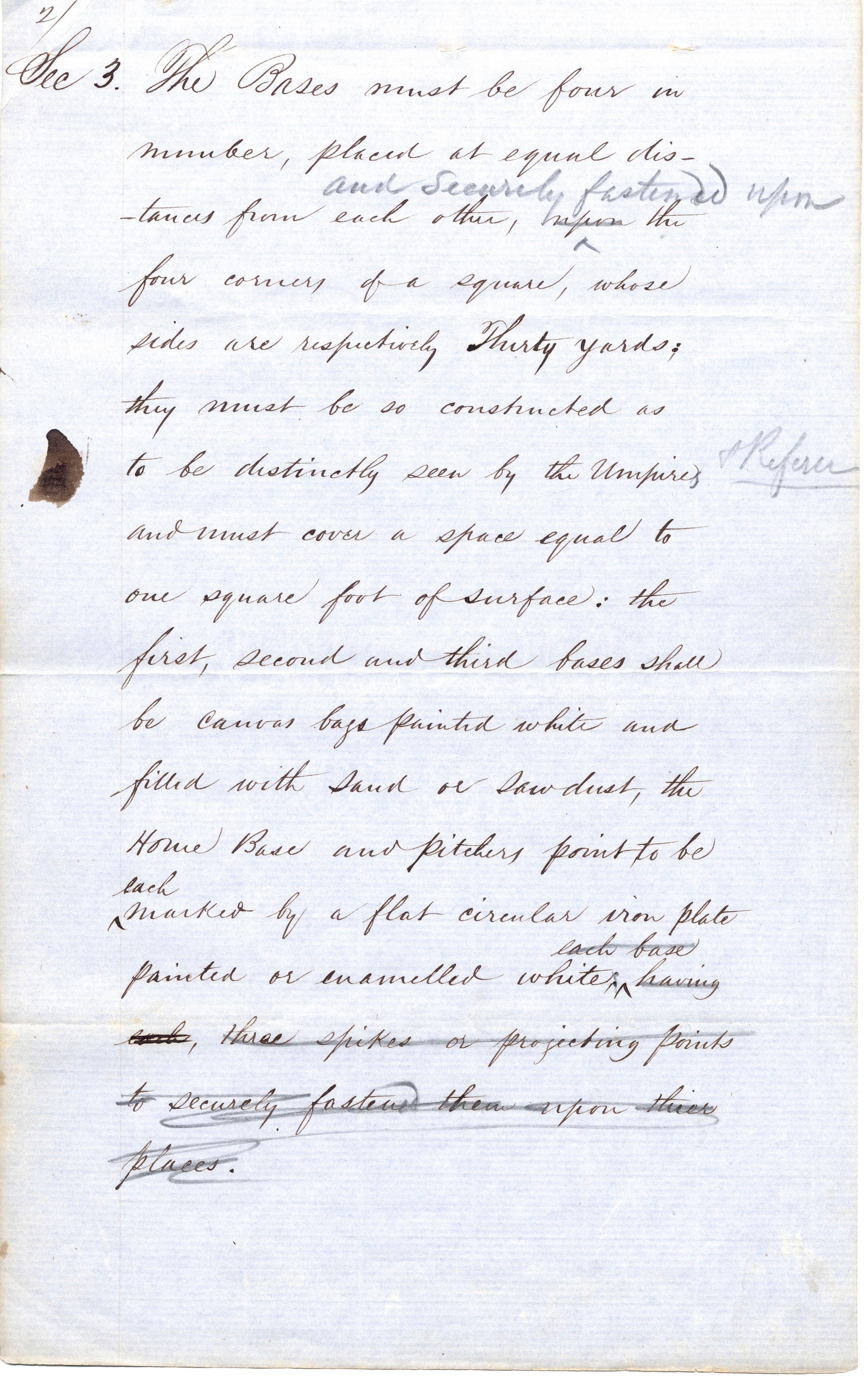
Page 2
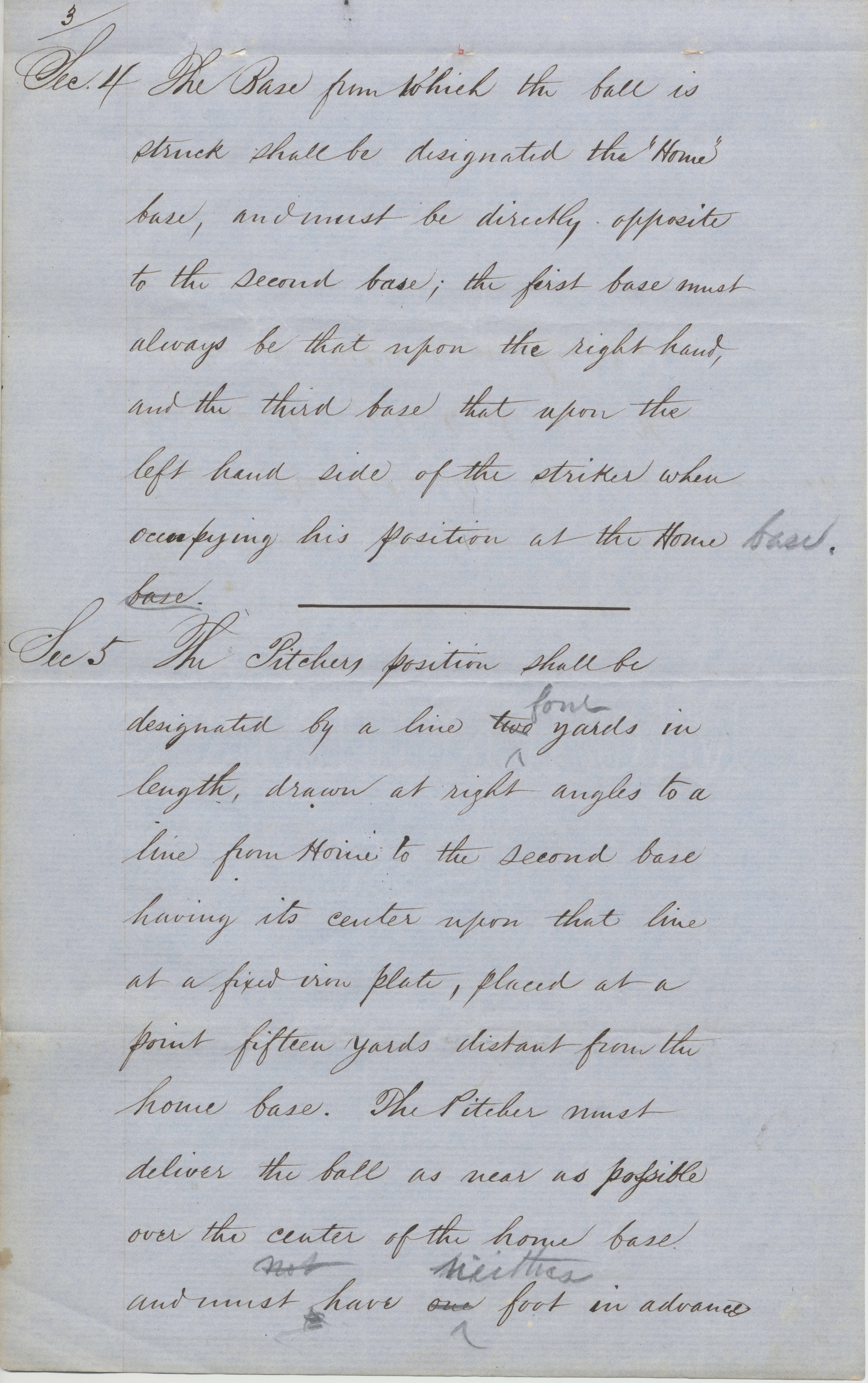
Page 3
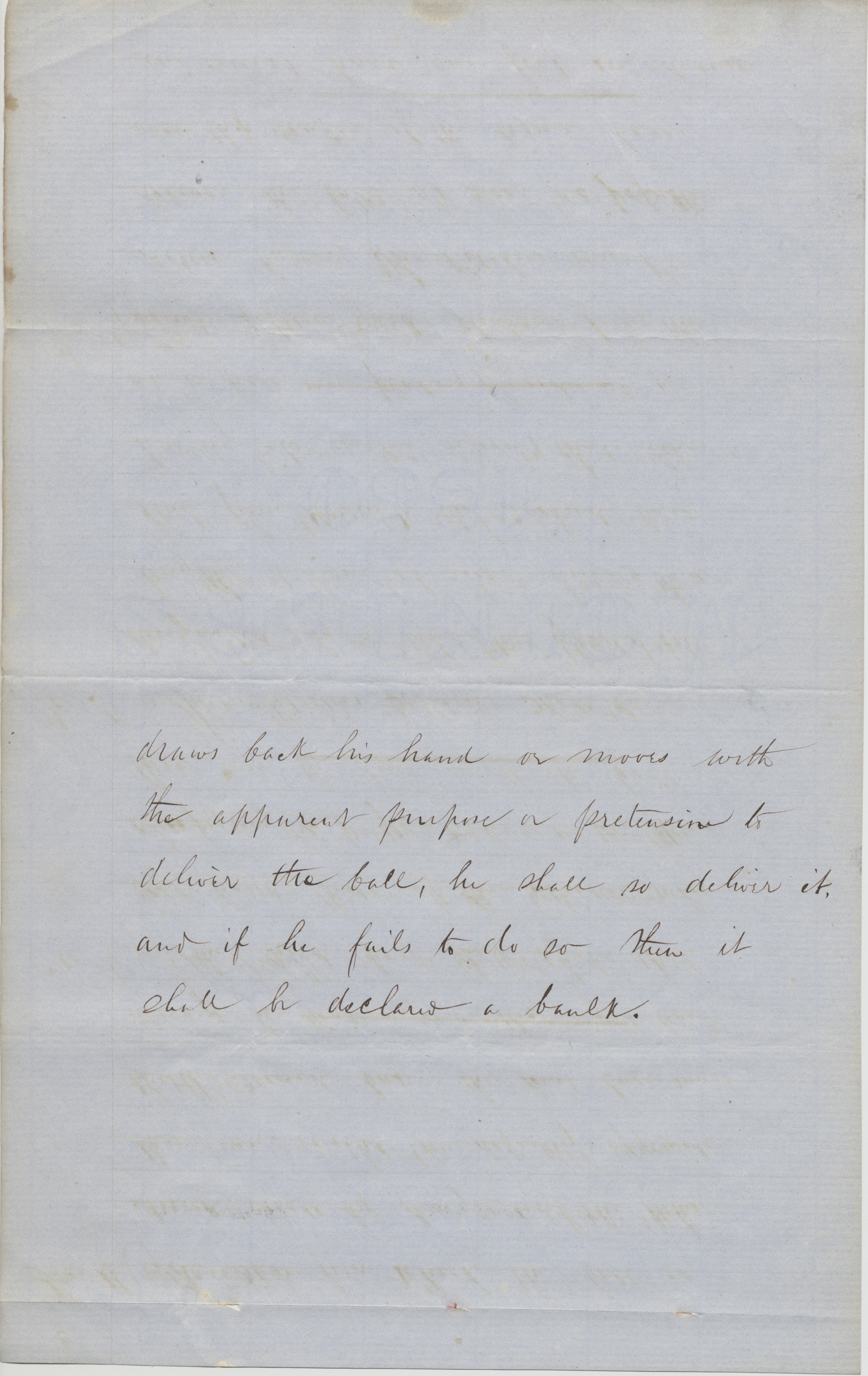
Page 4
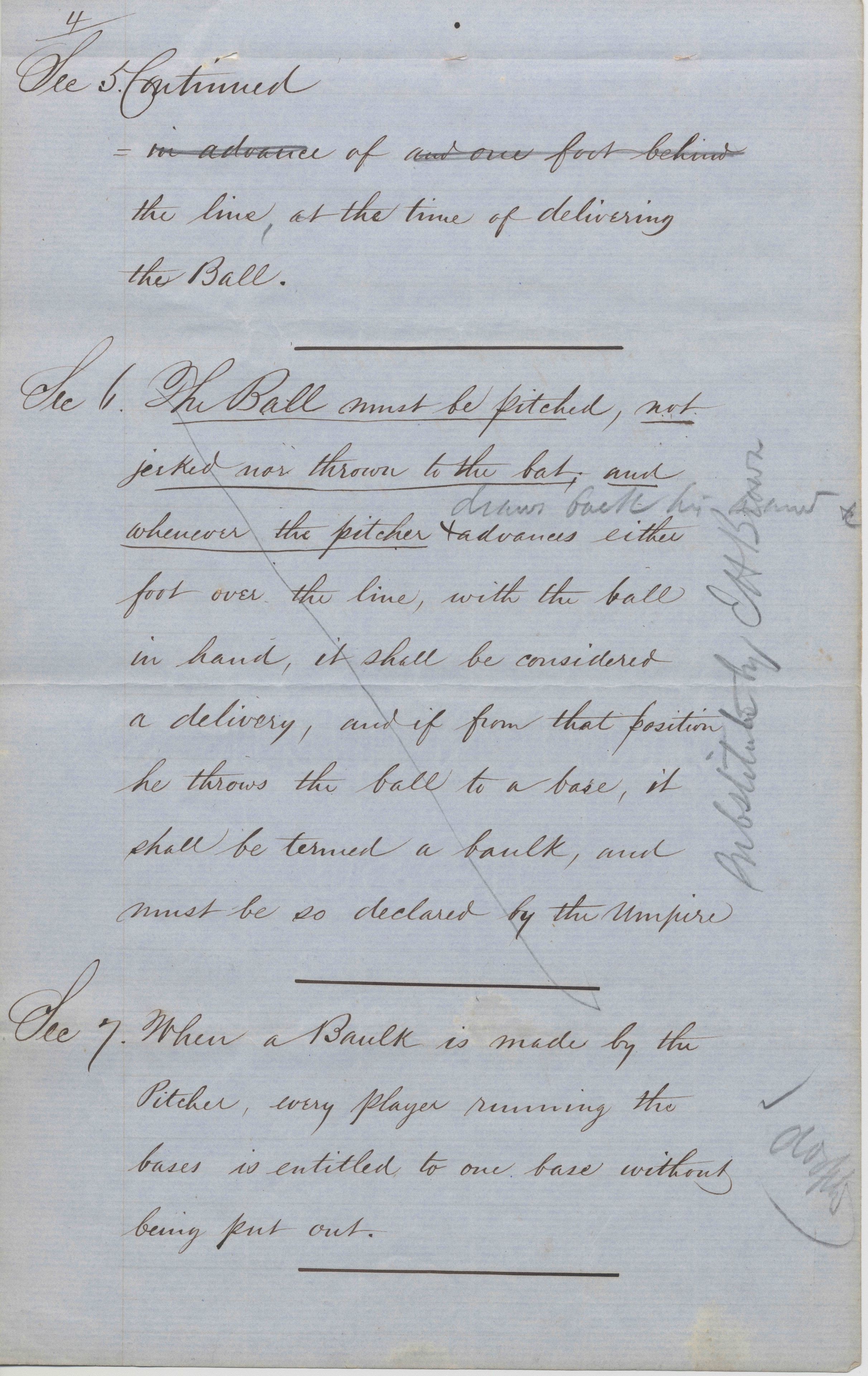
Page 5
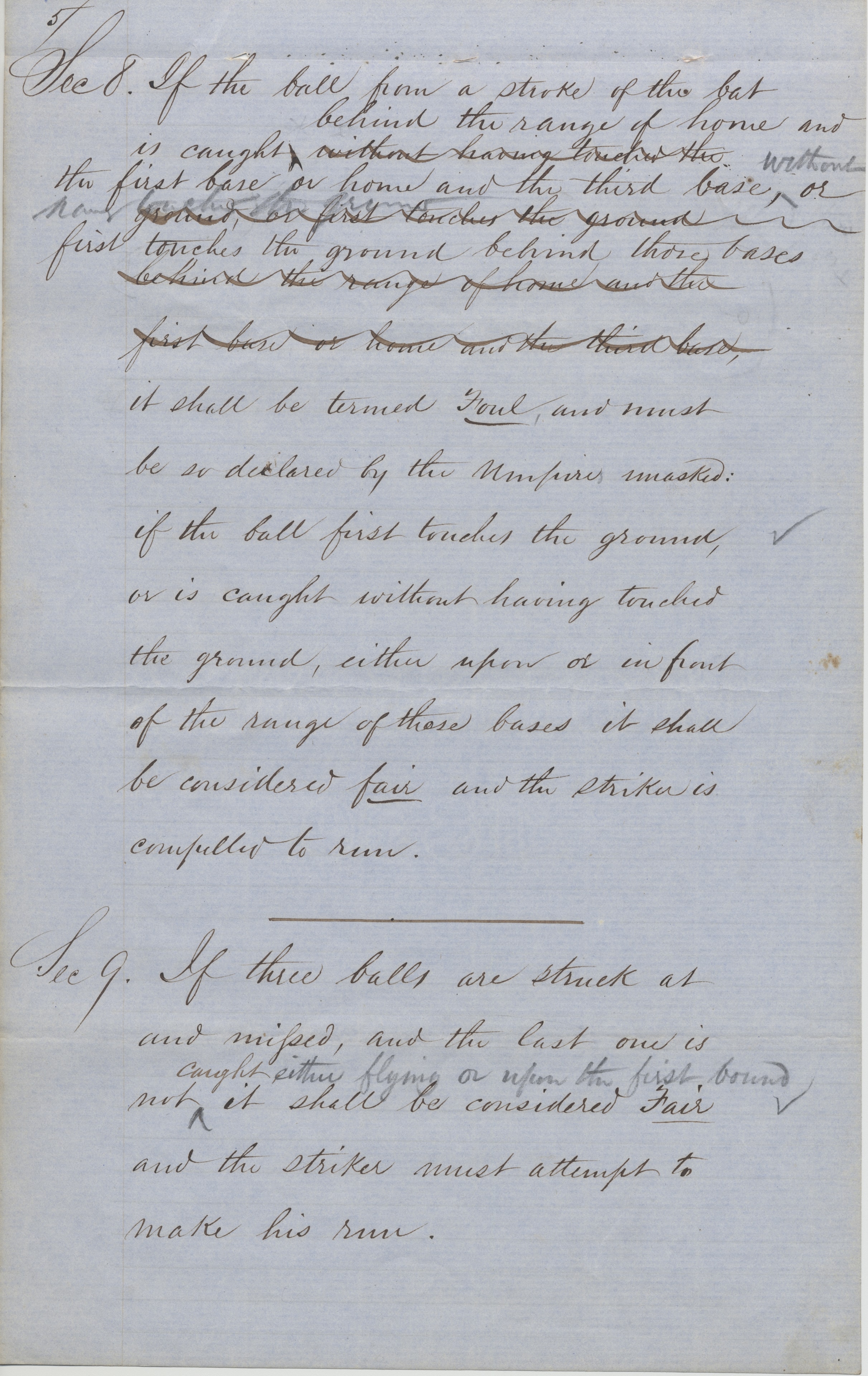
Page 6
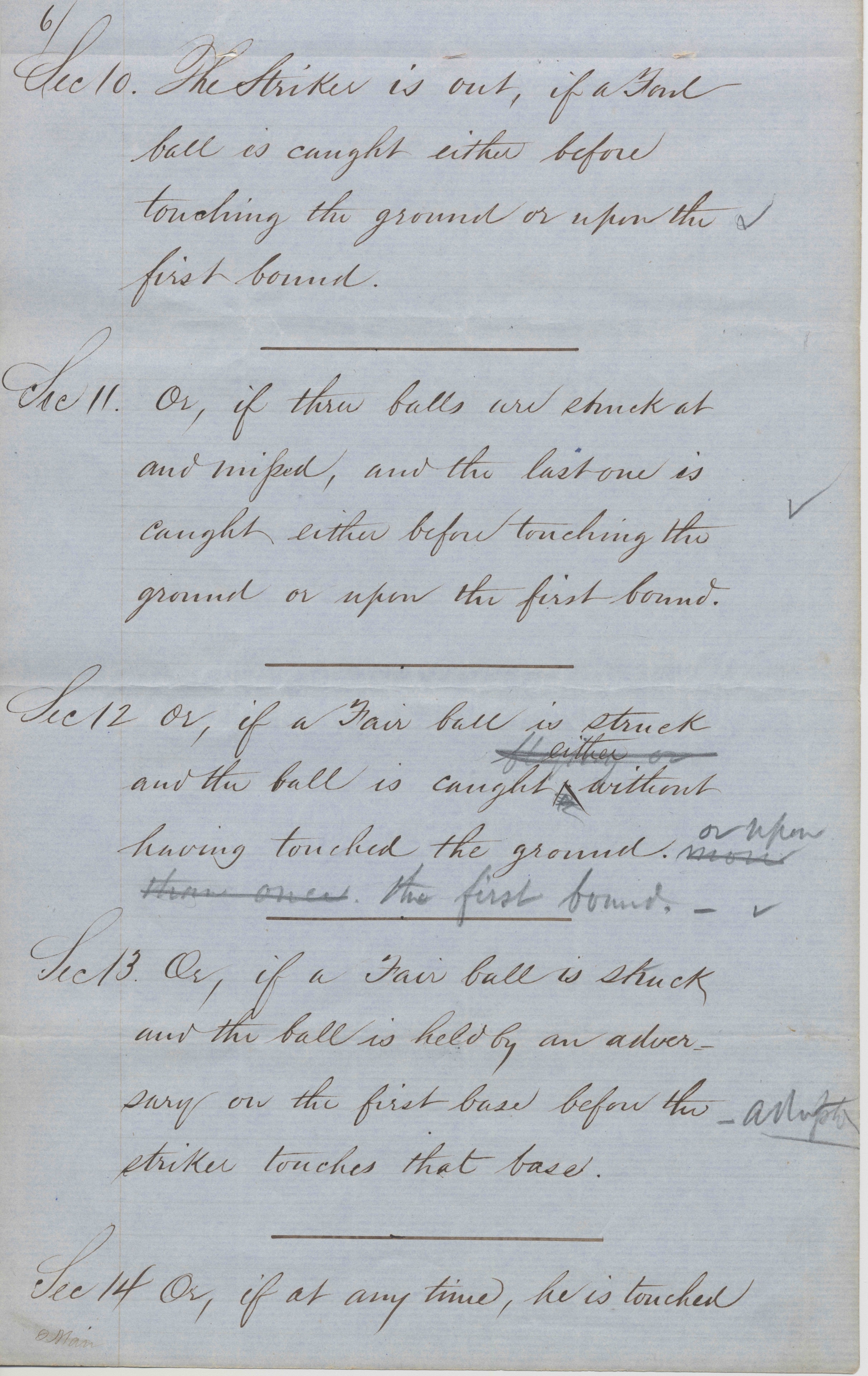
Page 7
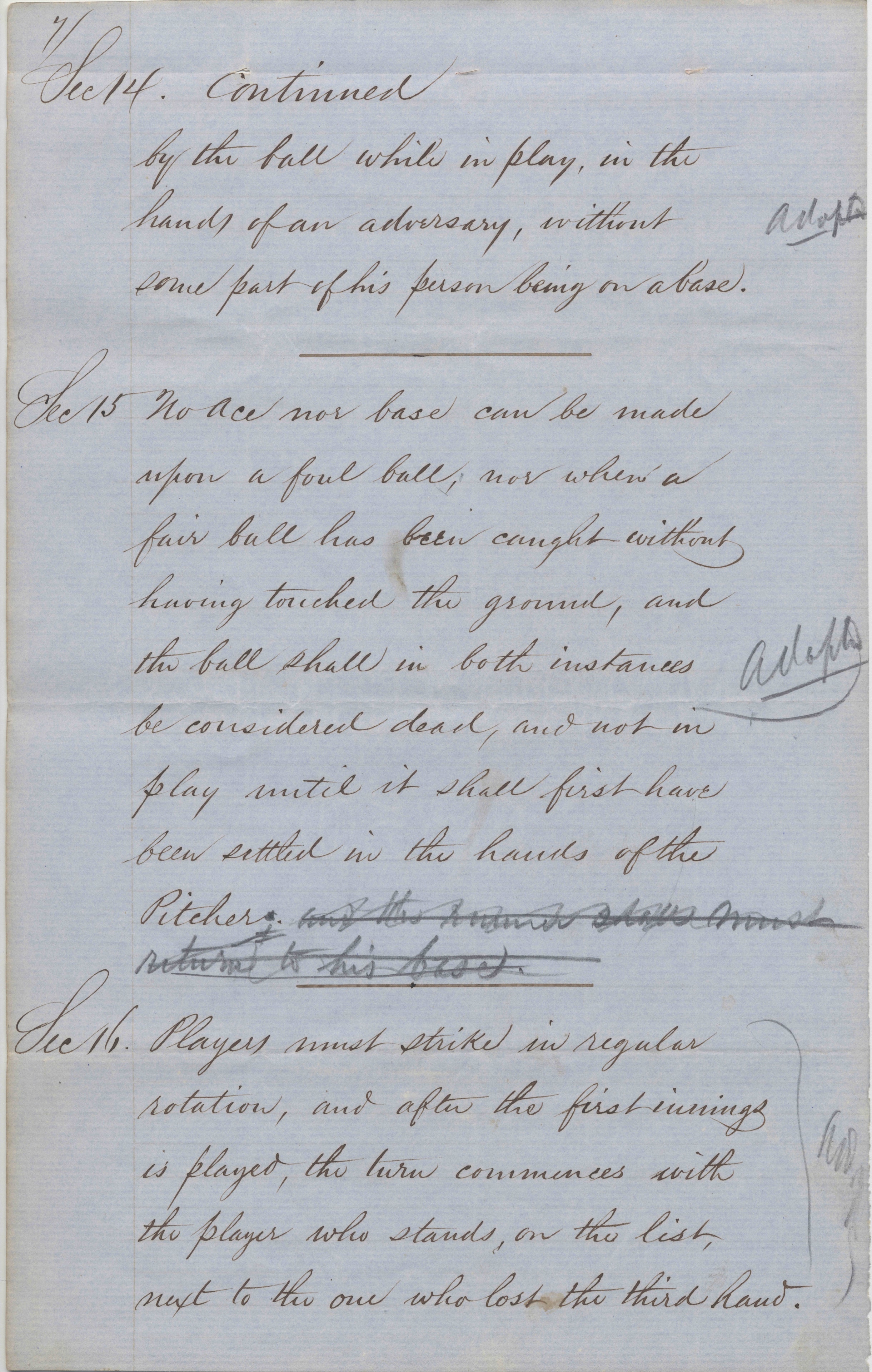
Page 8
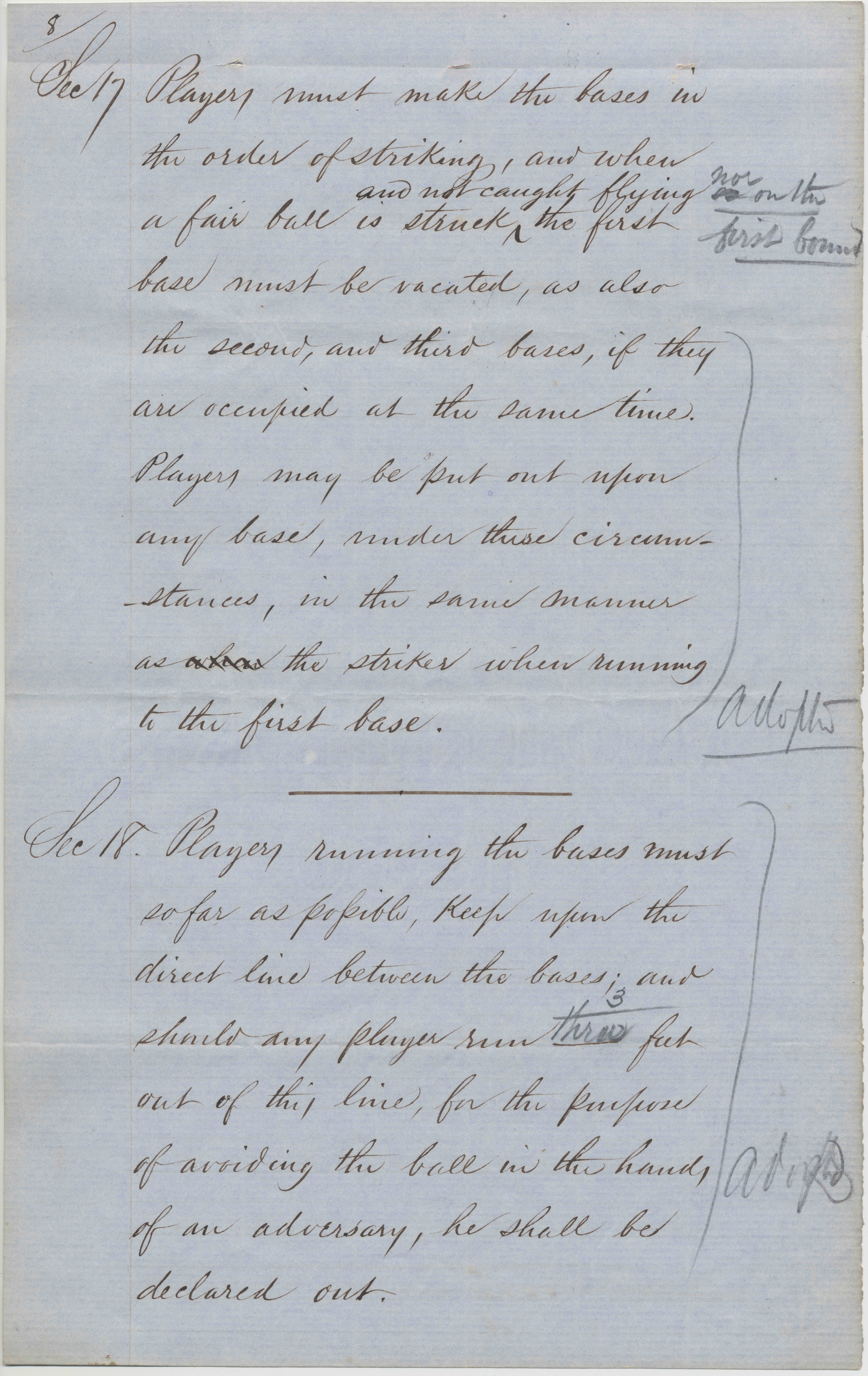
Page 9
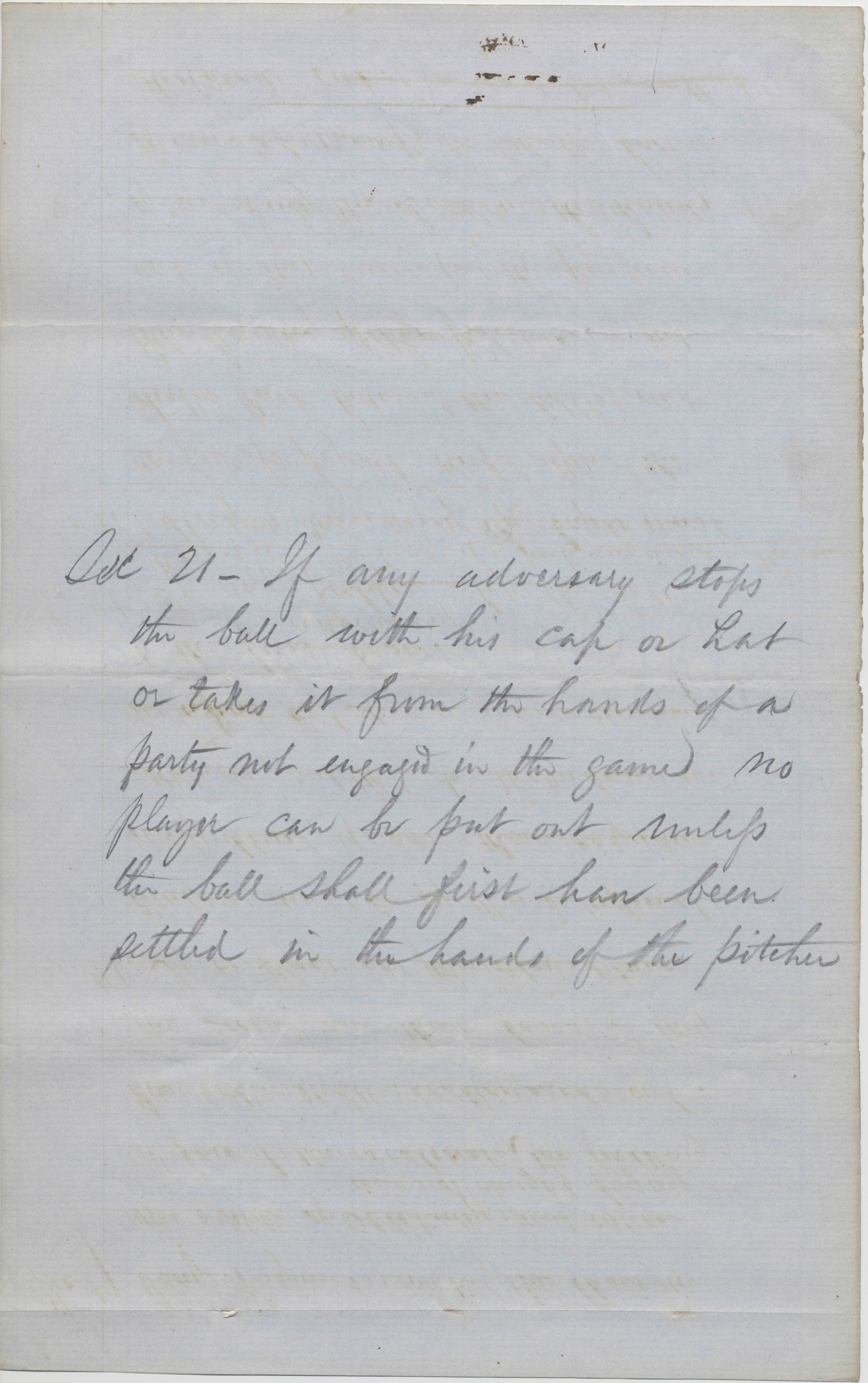
Page 10
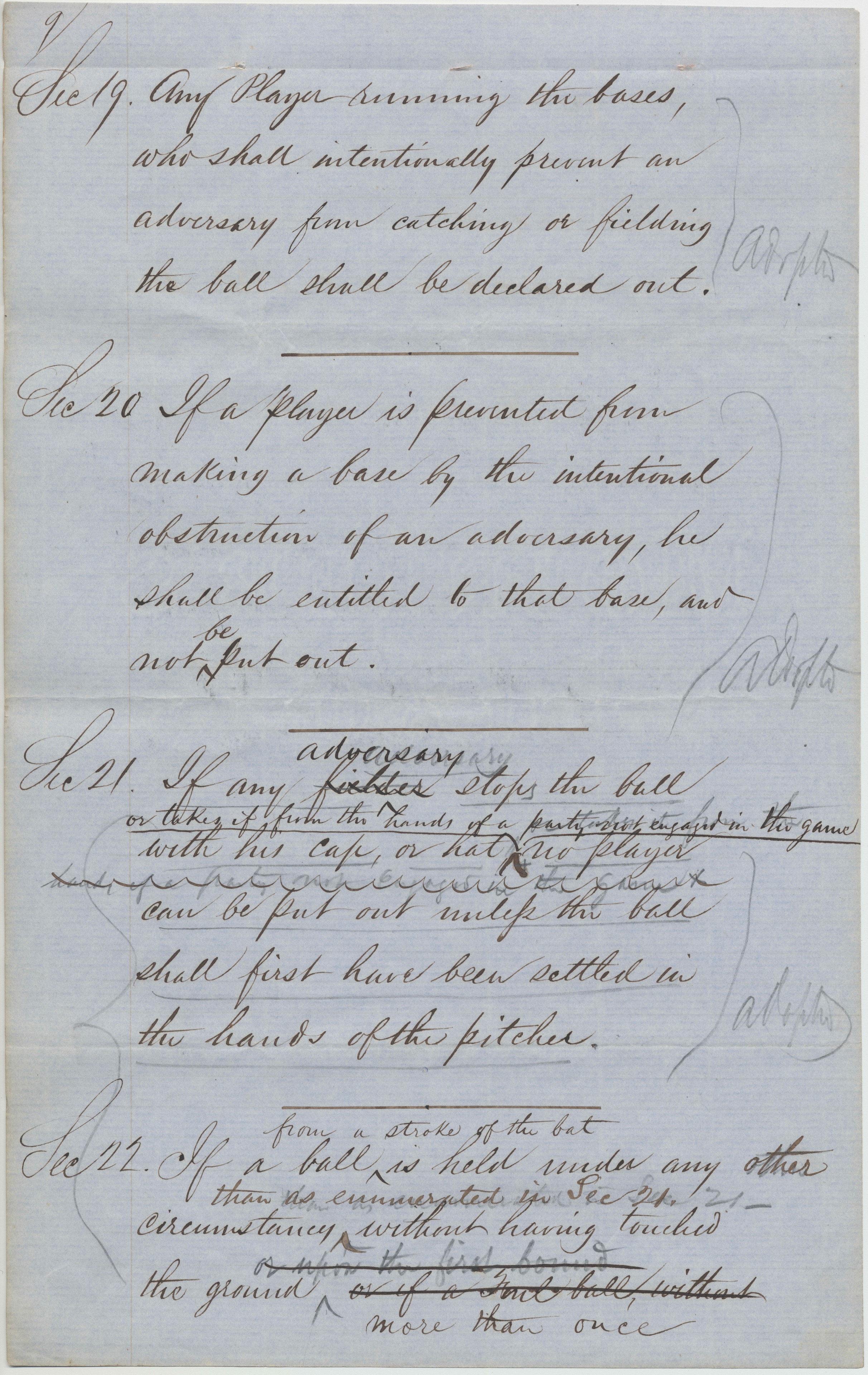
Page 11
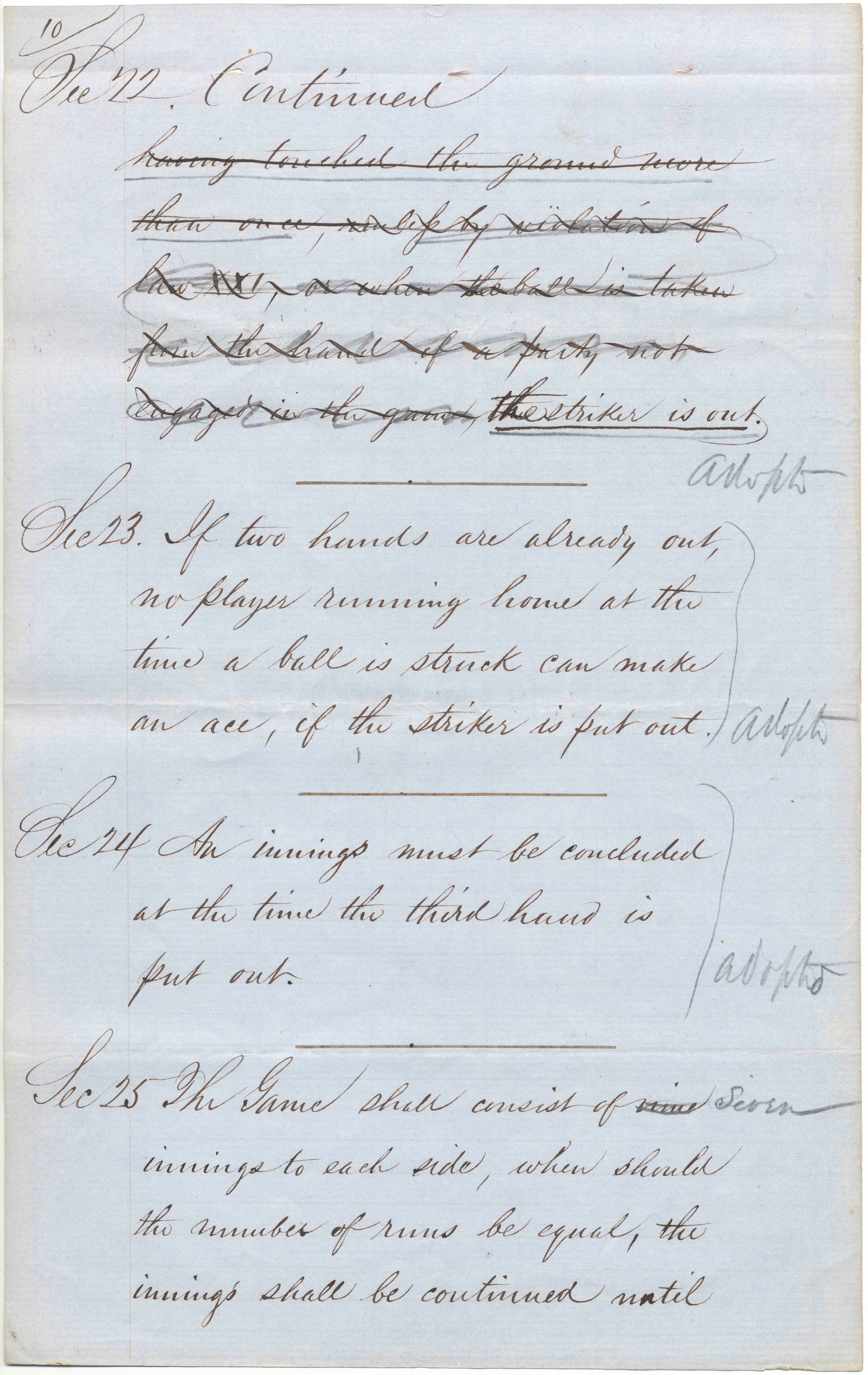
Page 12
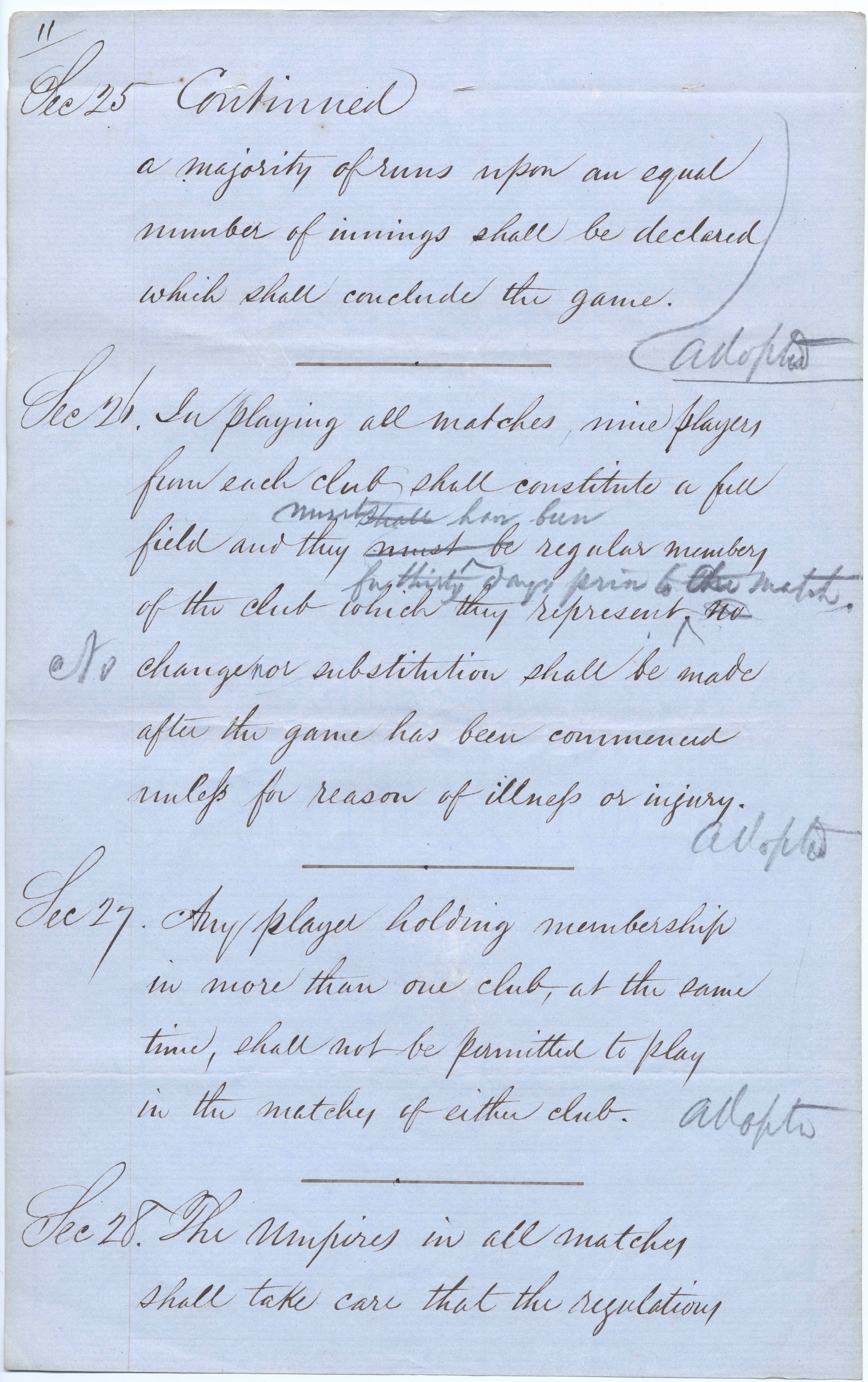
Page 13
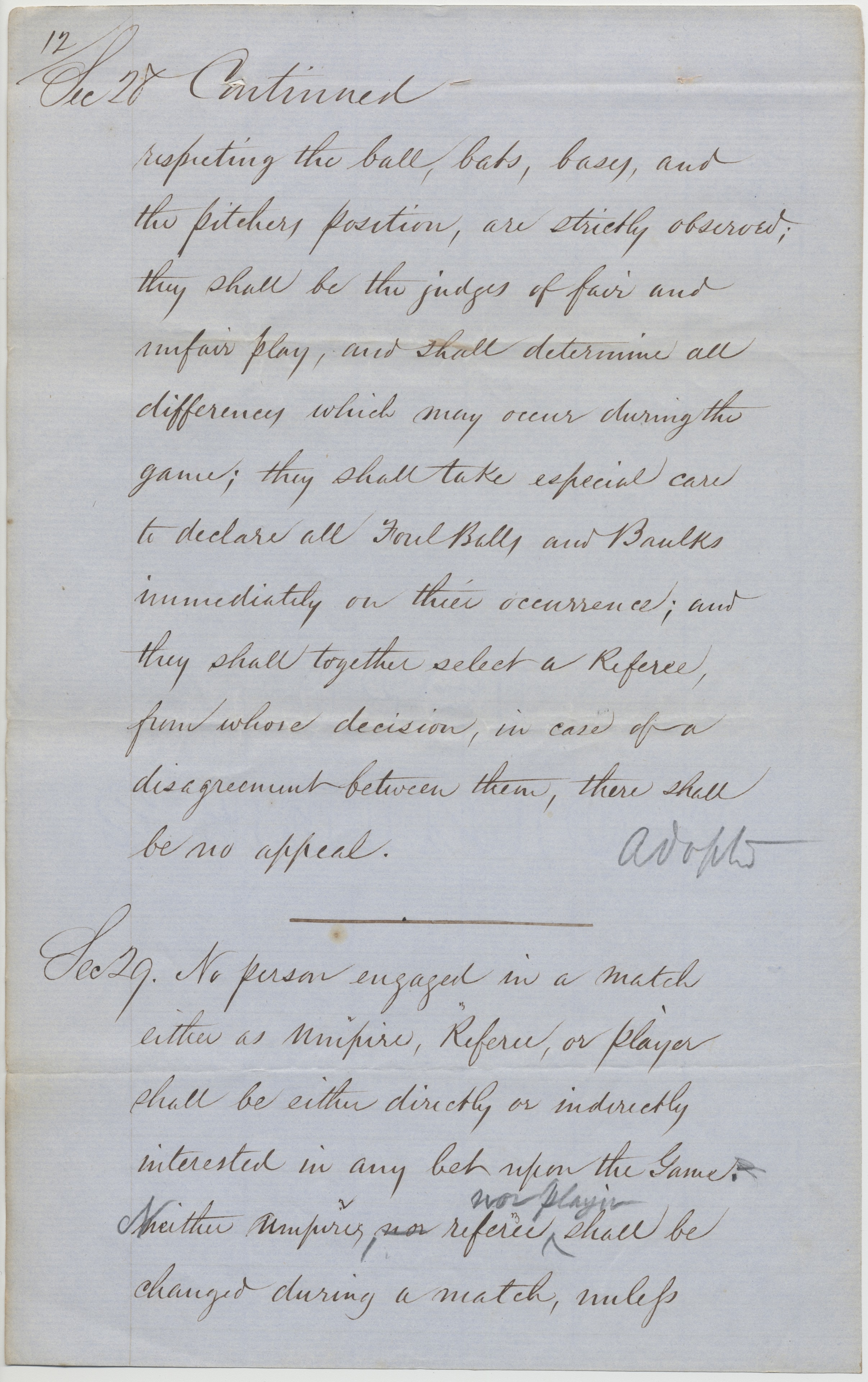
Page 14
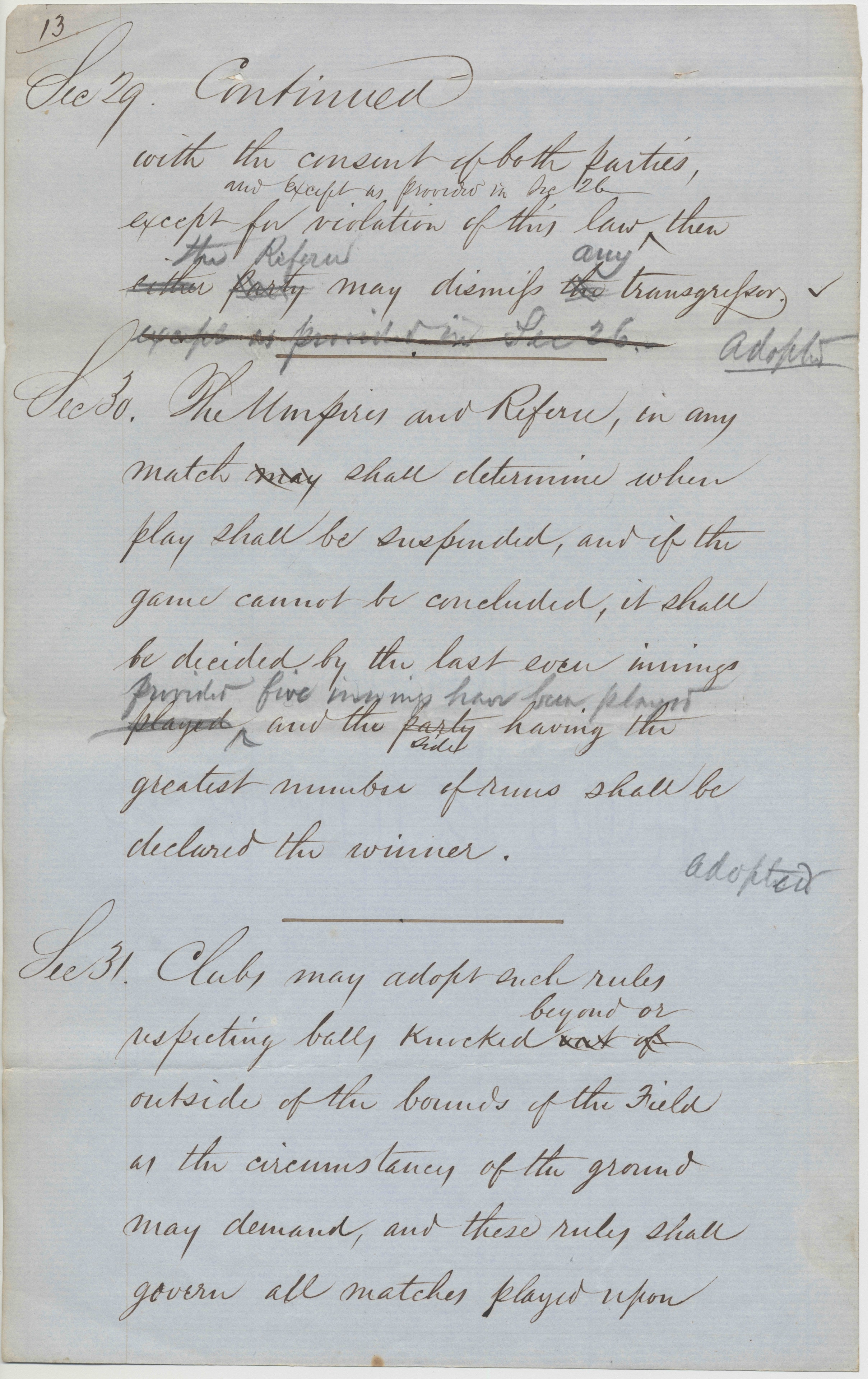
Page 15
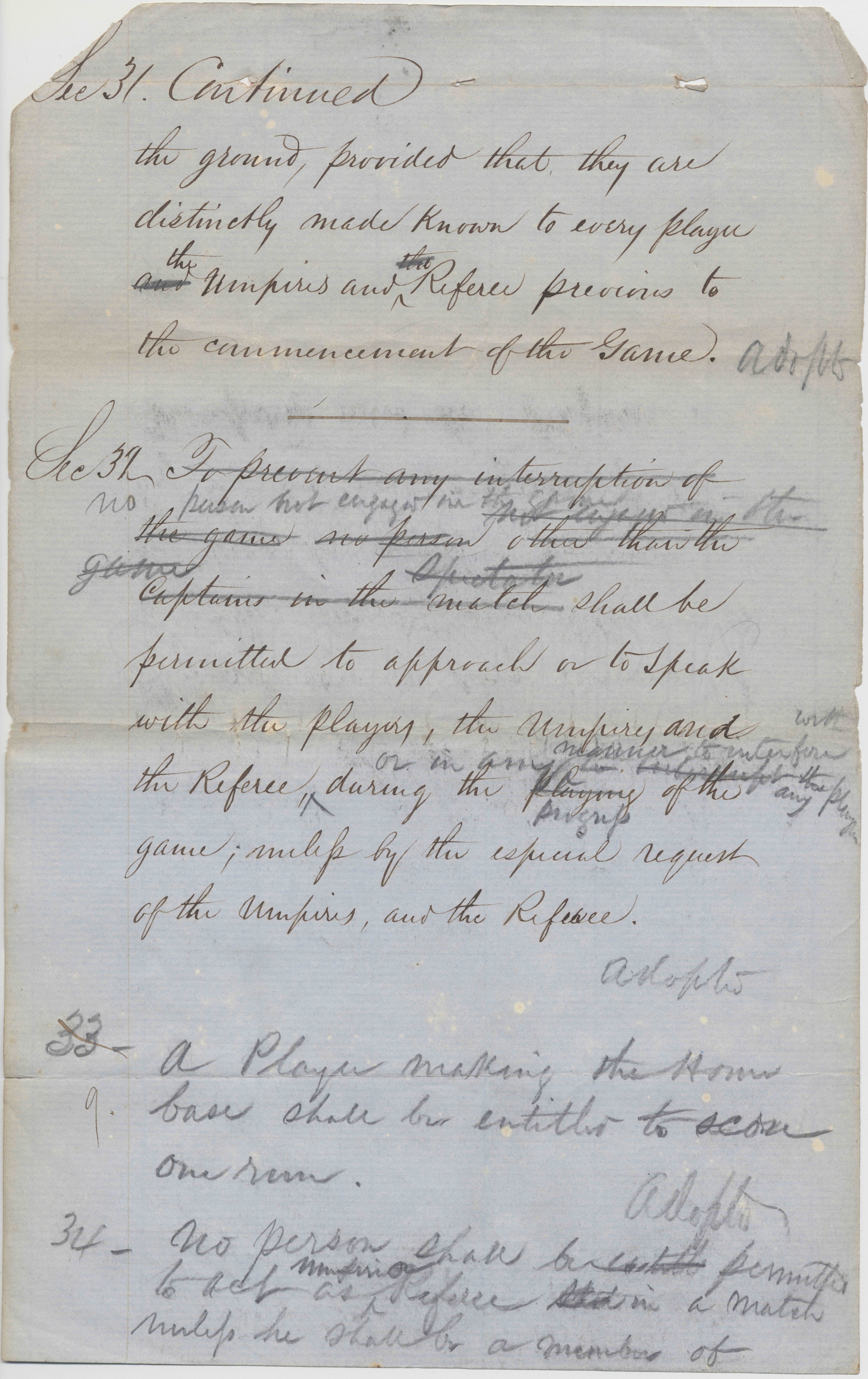
Page 16
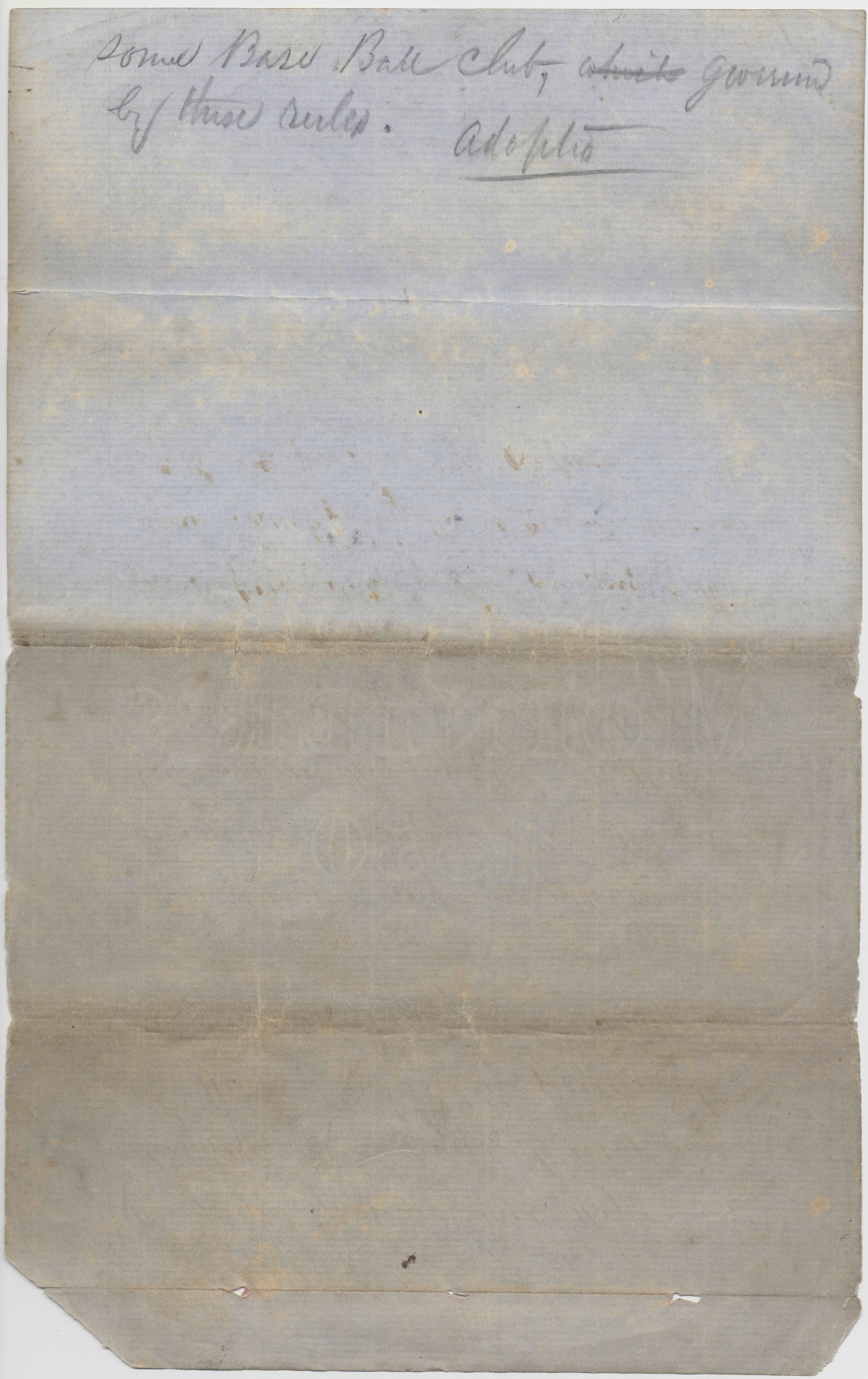
Page 17
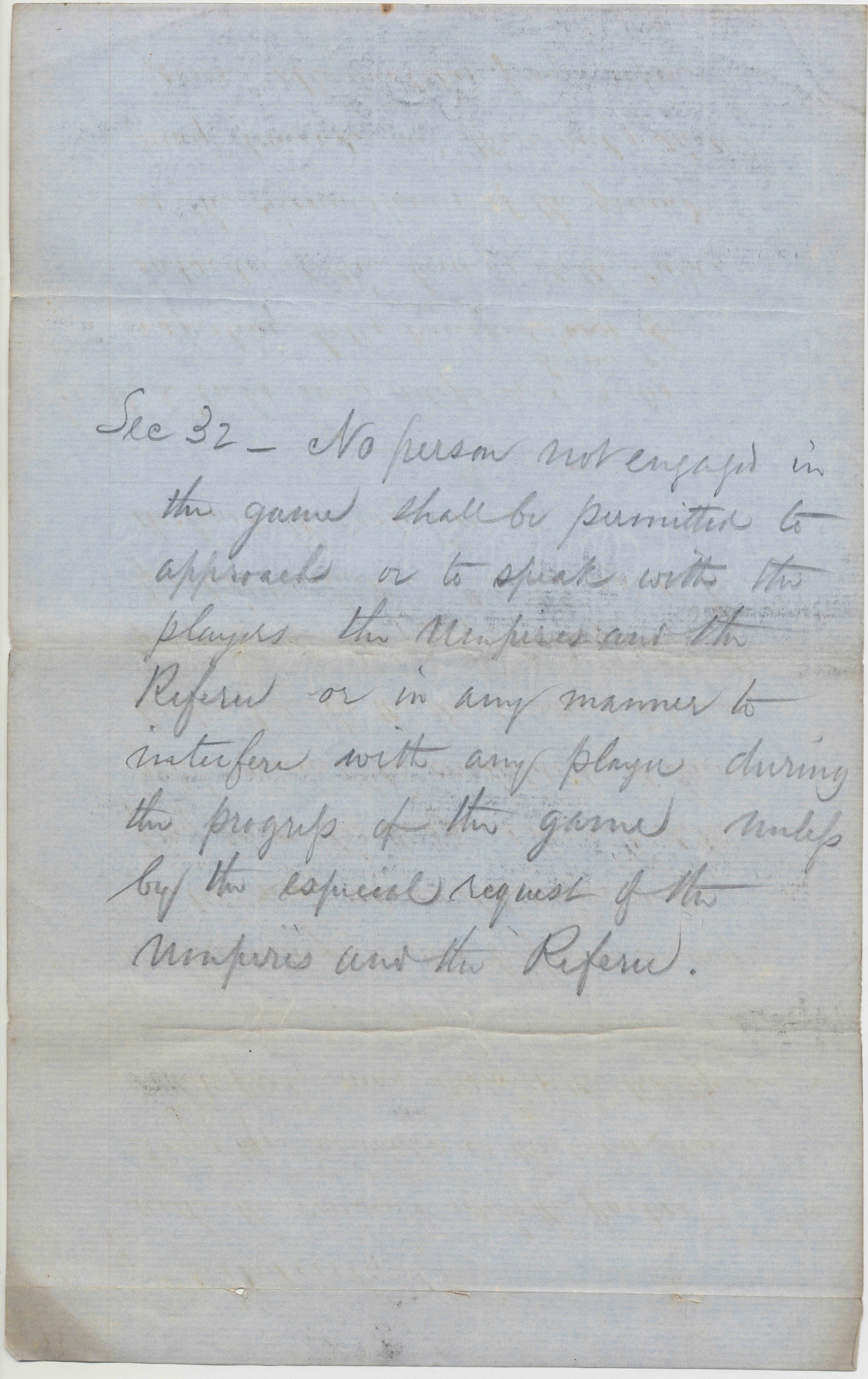
Page 18
Working Draft · 3 Pages
Doc Adams' Draft Laws
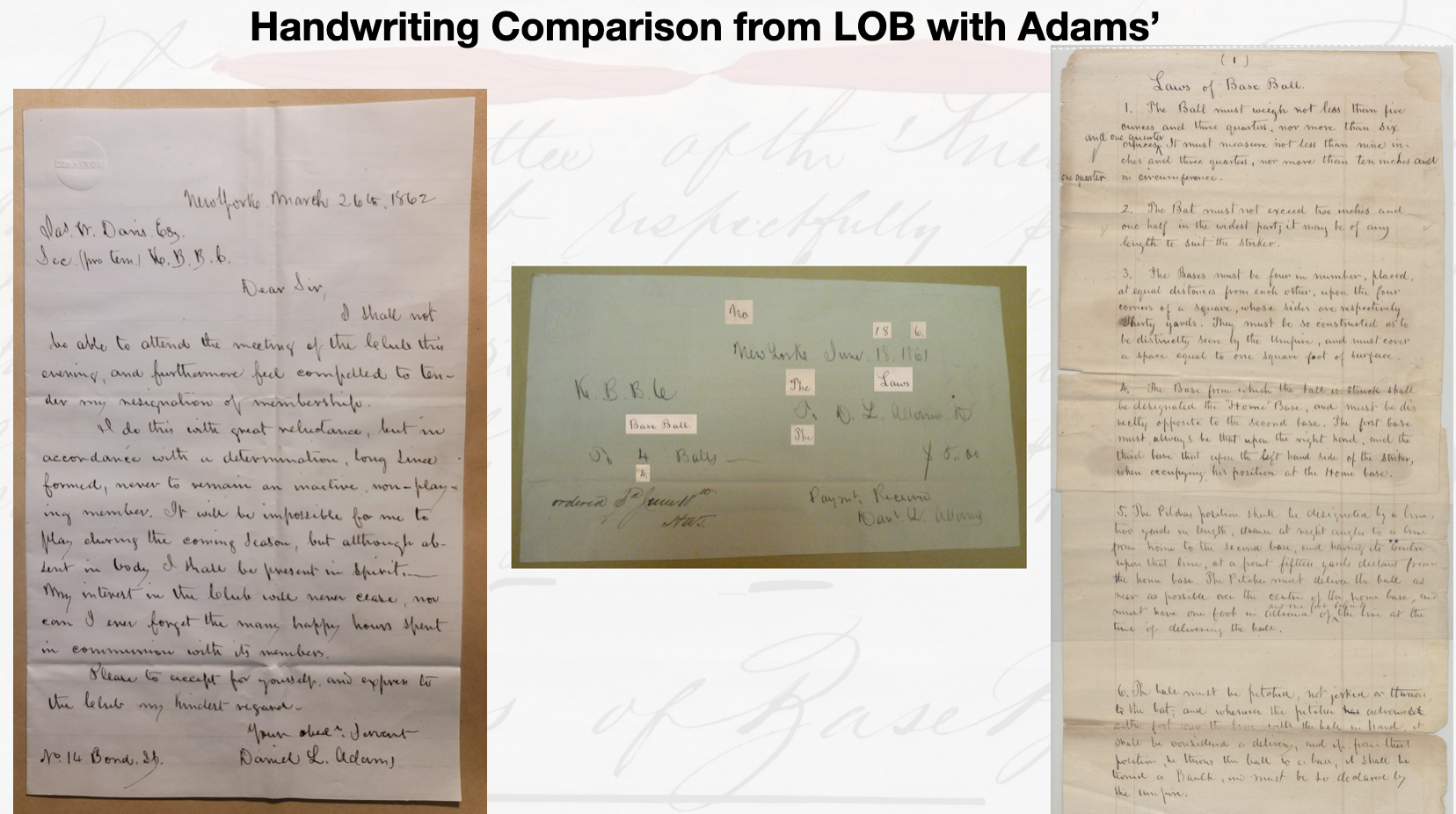
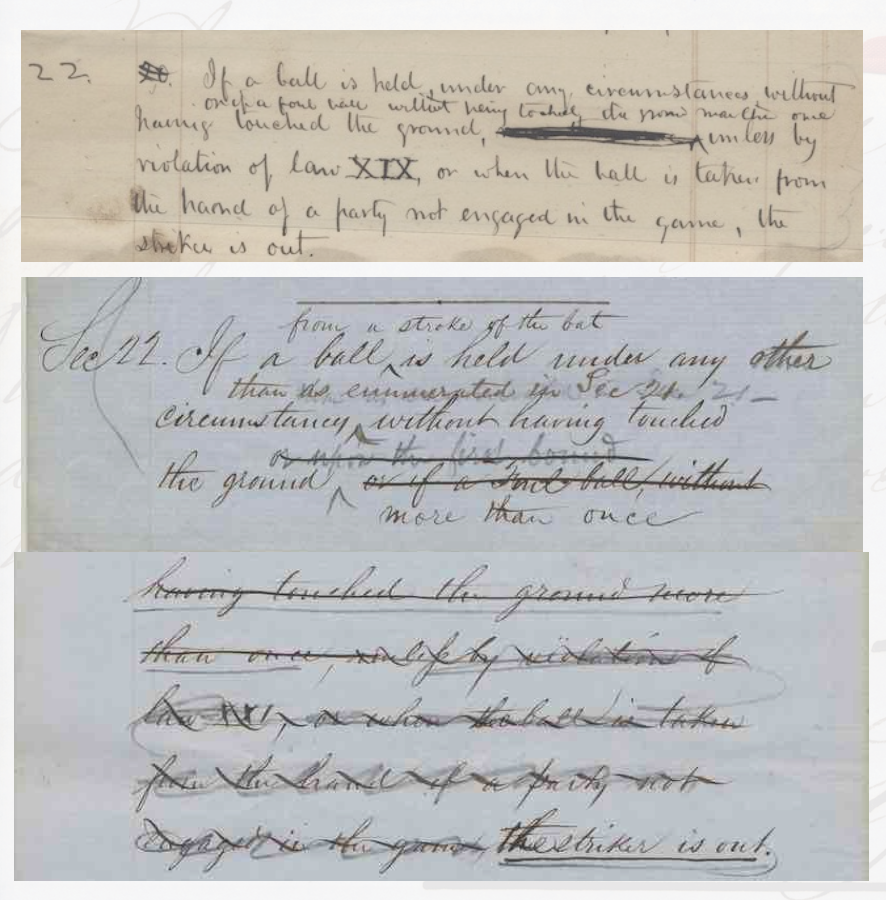
Adams' own working draft of the Laws — the handwritten pages he prepared before the 1857 Convention. These three pages show the Laws in Adams' own hand, and were the primary evidence used in the 2015 identification of his authorship.
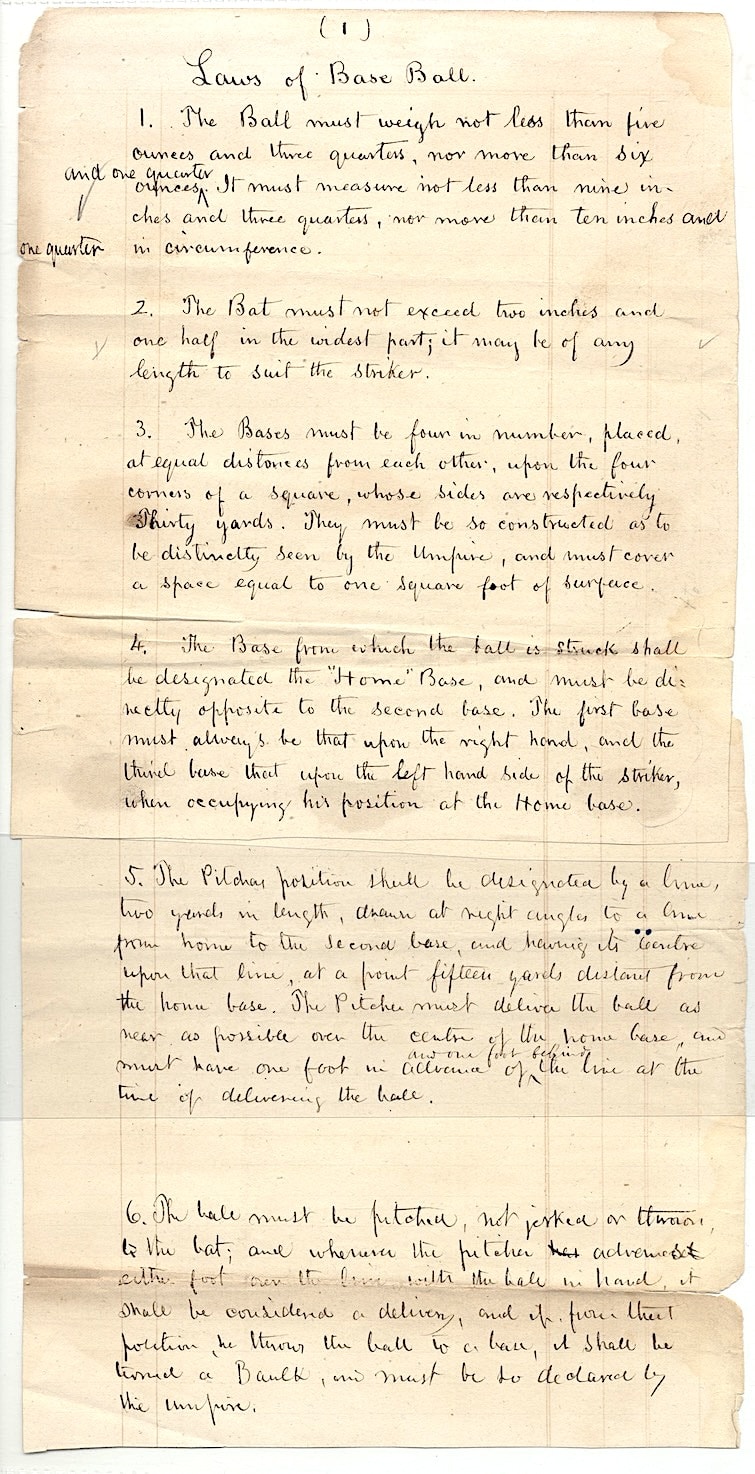
Page 1
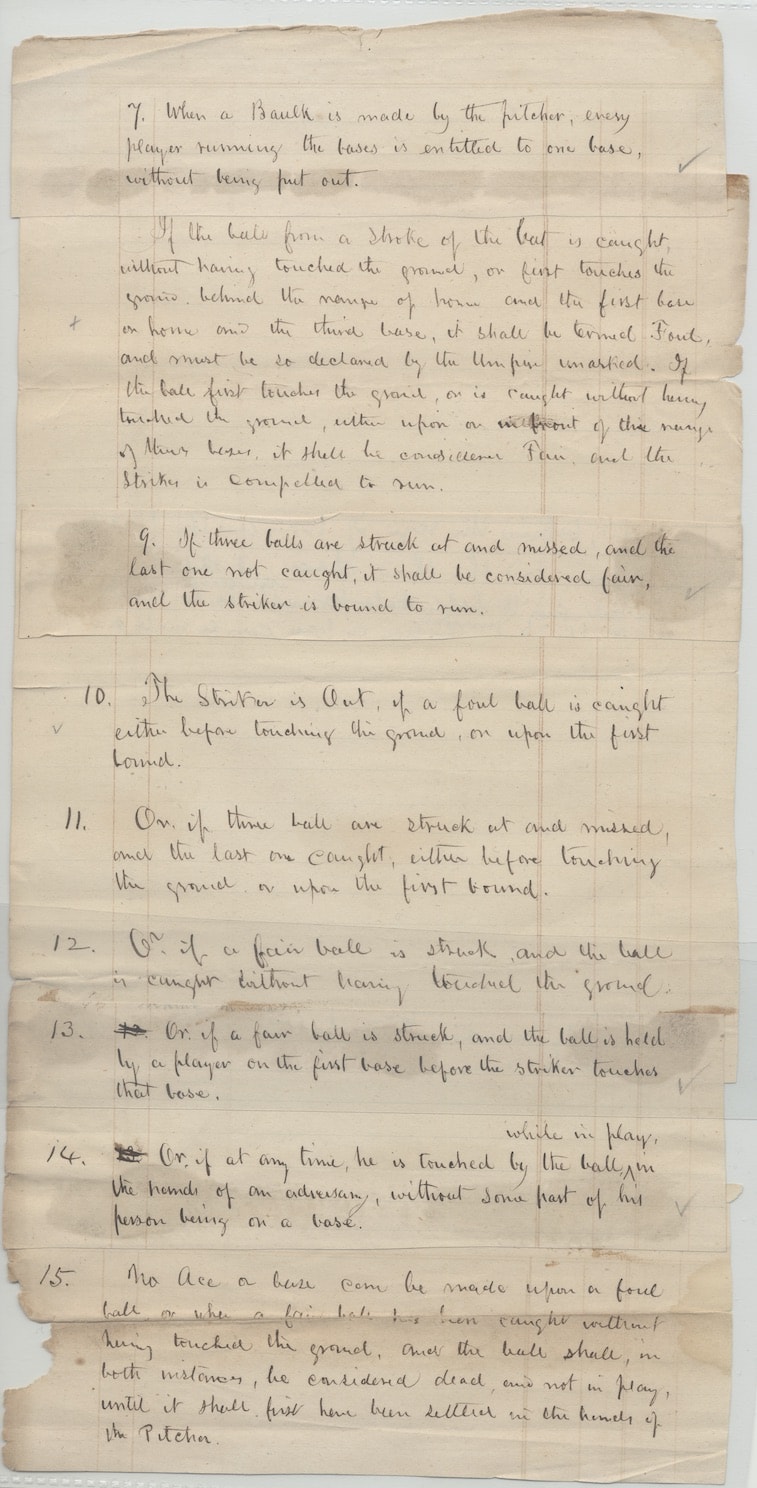
Page 2
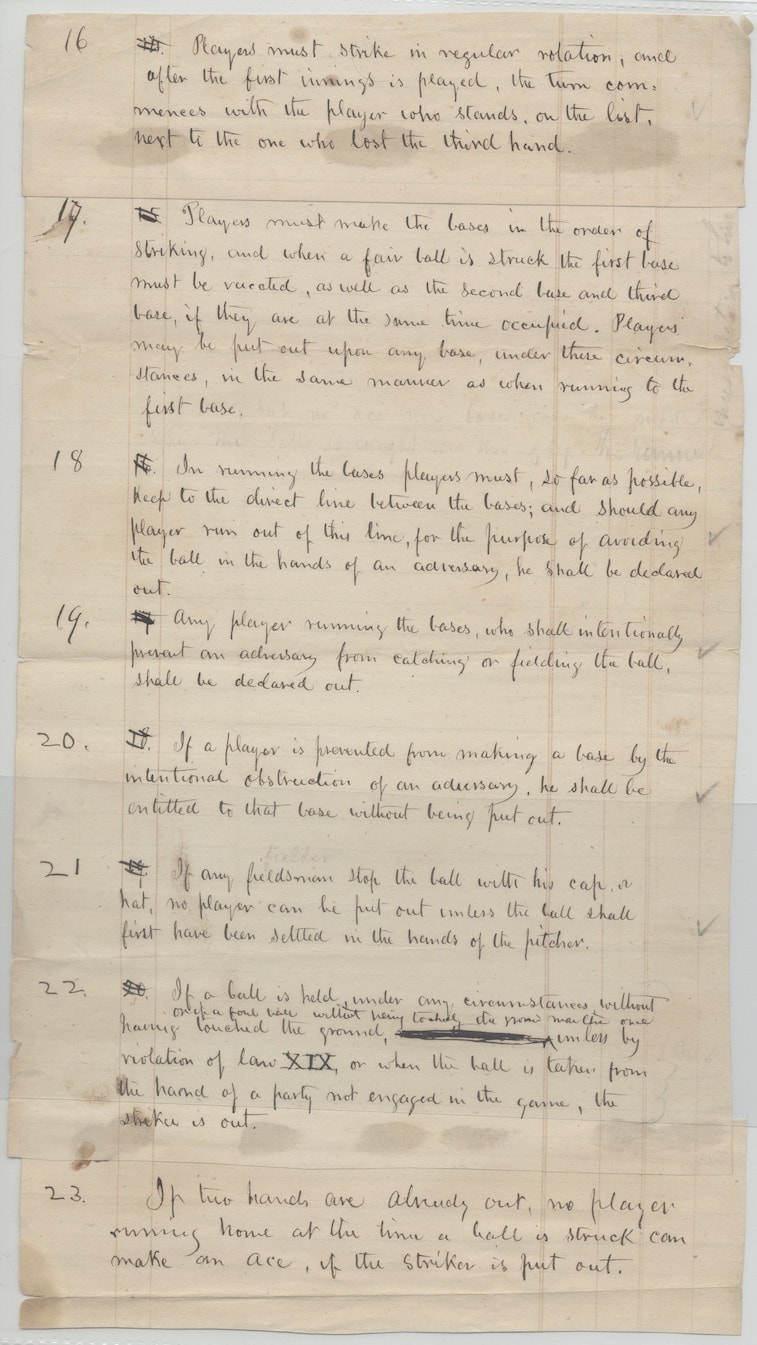
Page 3
Scholarly Analysis · 21 Pages
Analysis of the Laws
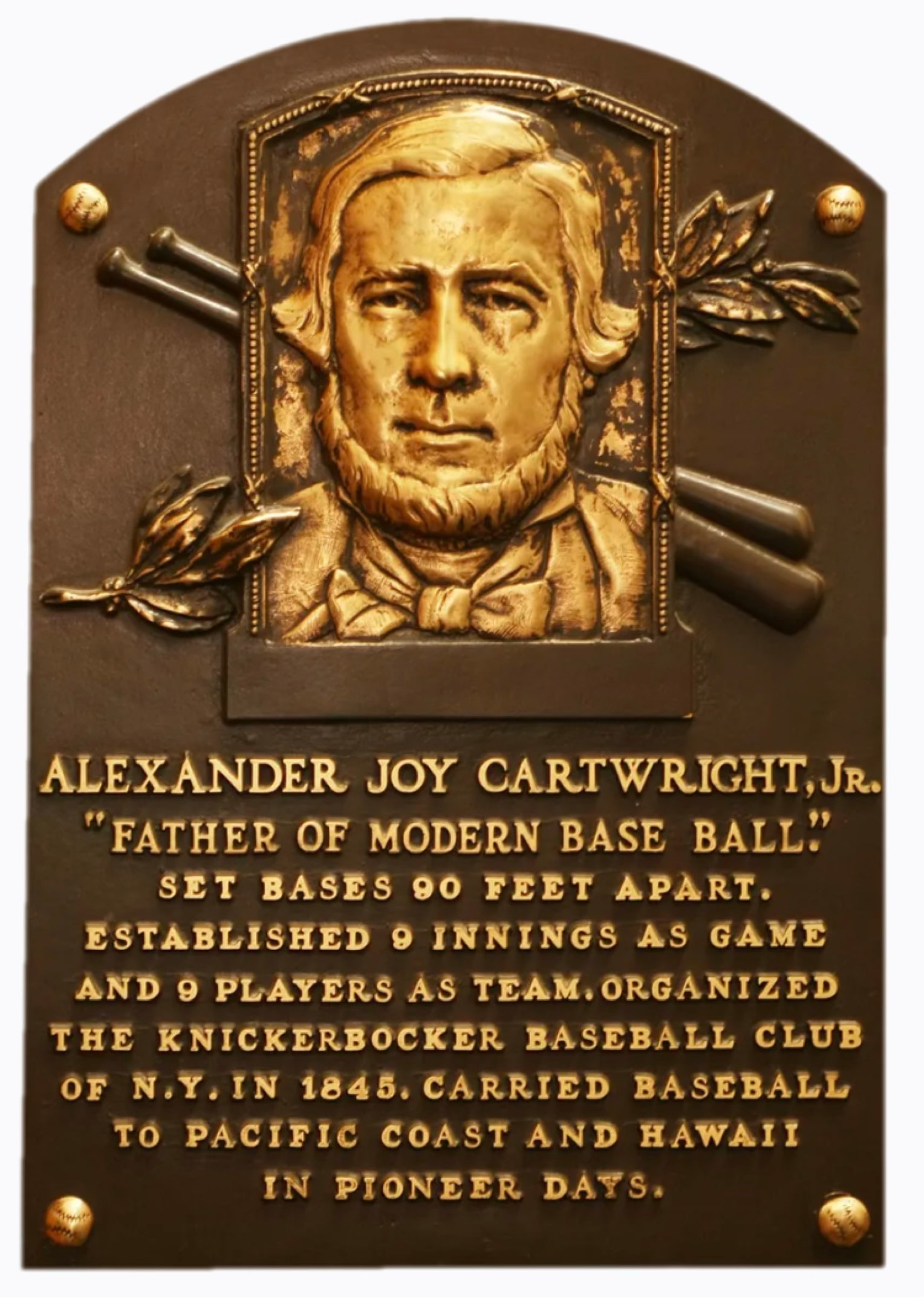
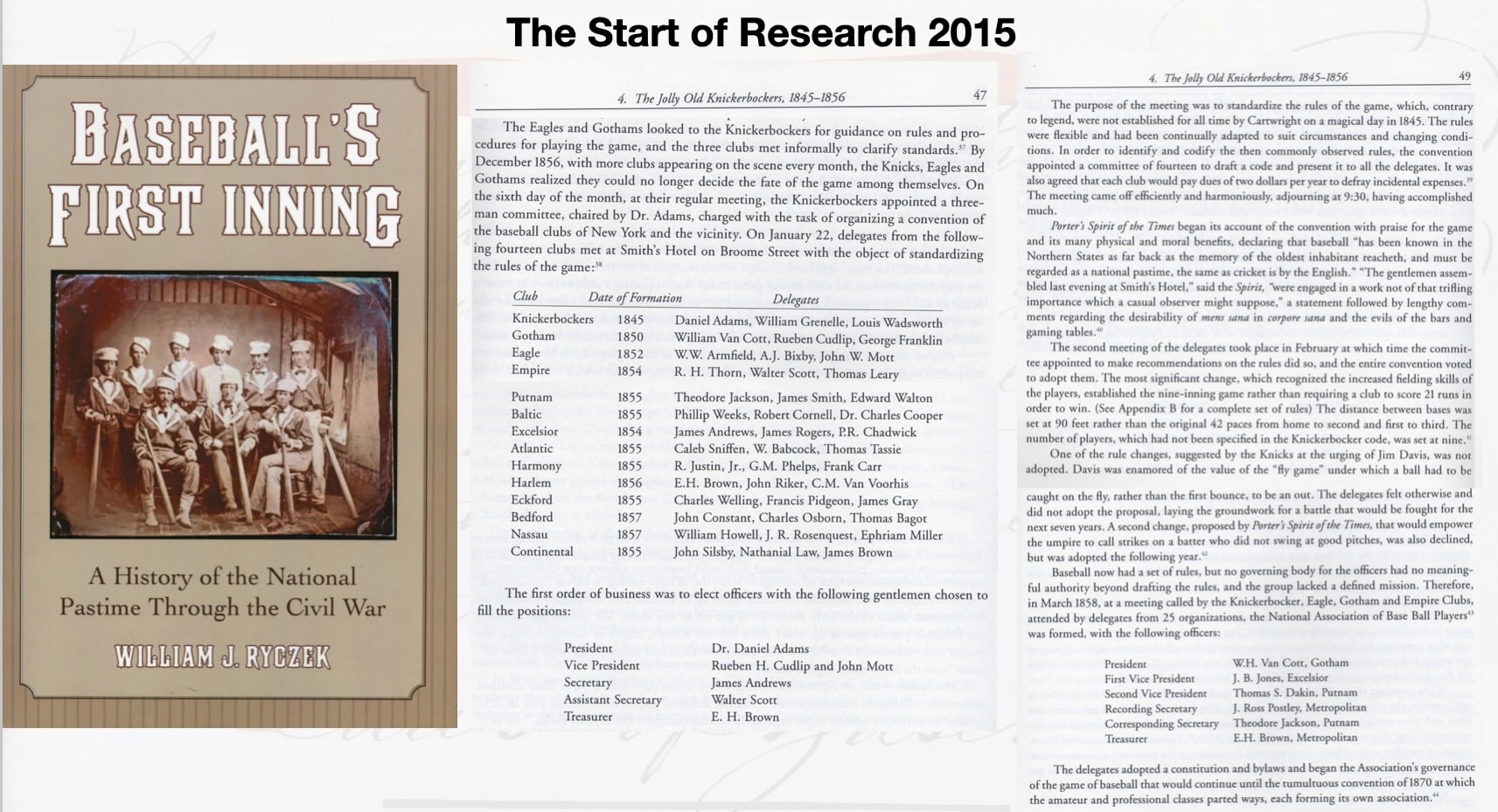
In 2015, after the researcher received the documents he met with MLB historian John Thorn who has forgotten more than the researcher knows about the history of baseball. In 1991 Thorn was the first accredited historian to recognize the importance of Adams to the history of baseball. While Thorn had written broadly about the history of baseball and Adams' role in trade journals, all such writings were seemingly ignored by the Hall of Fame and people with general knowledge of baseball history. The meeting was insightful. While baseball has a long and complex history tracking back to many ball-and-bat games, the modern game of baseball has a clearer path. The Laws of Baseball documents painted a clear fact-based analysis, using original documents, of the role that Adams played in the history of modern baseball contradicting the information widely disseminated to the public and at the Hall of Fame.
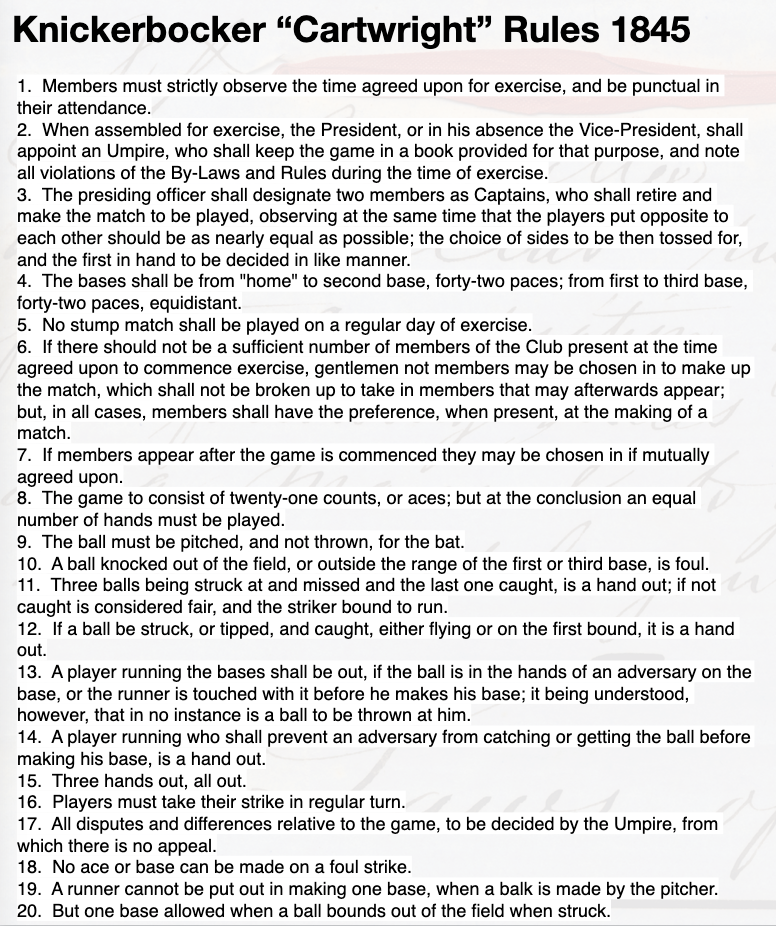
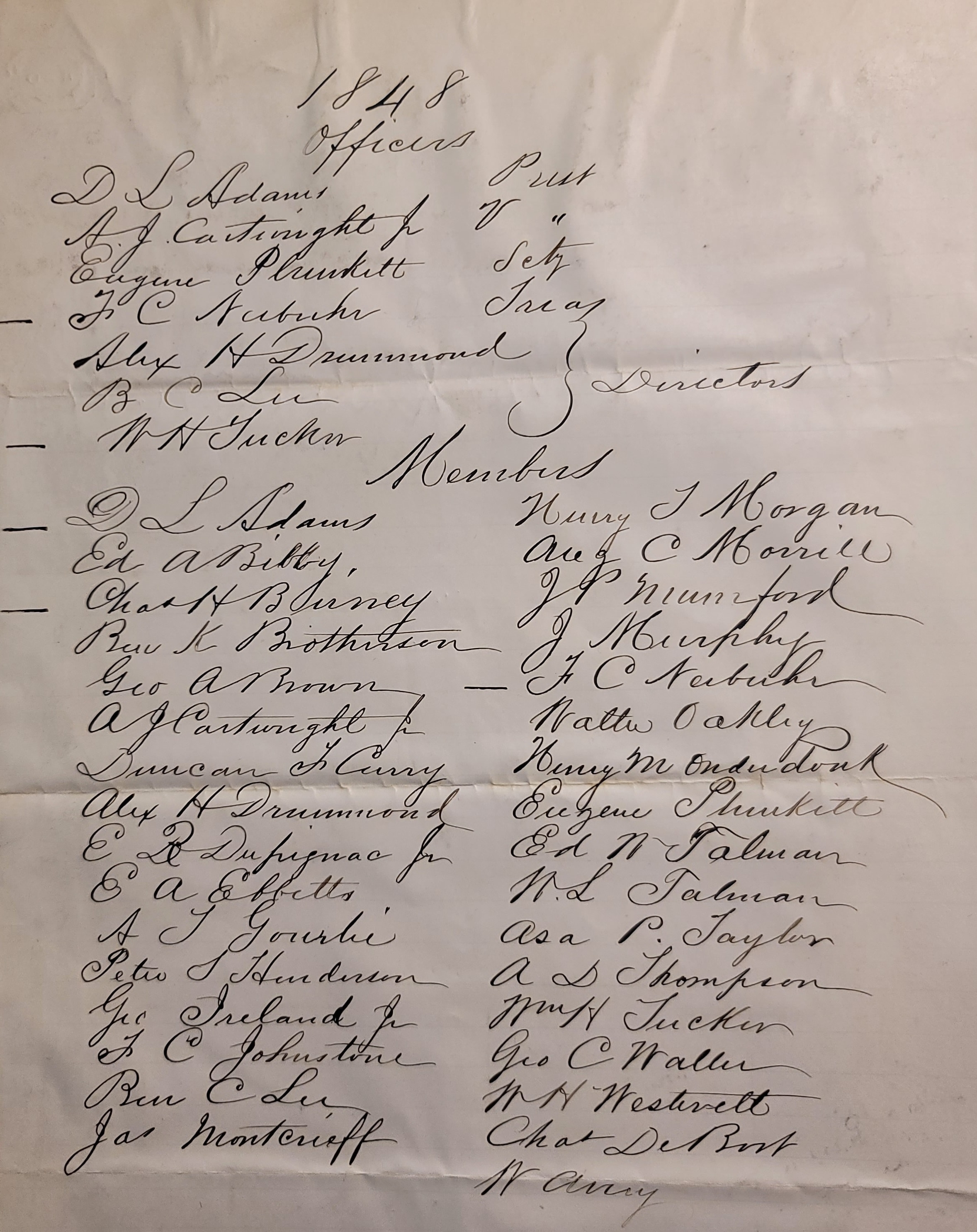
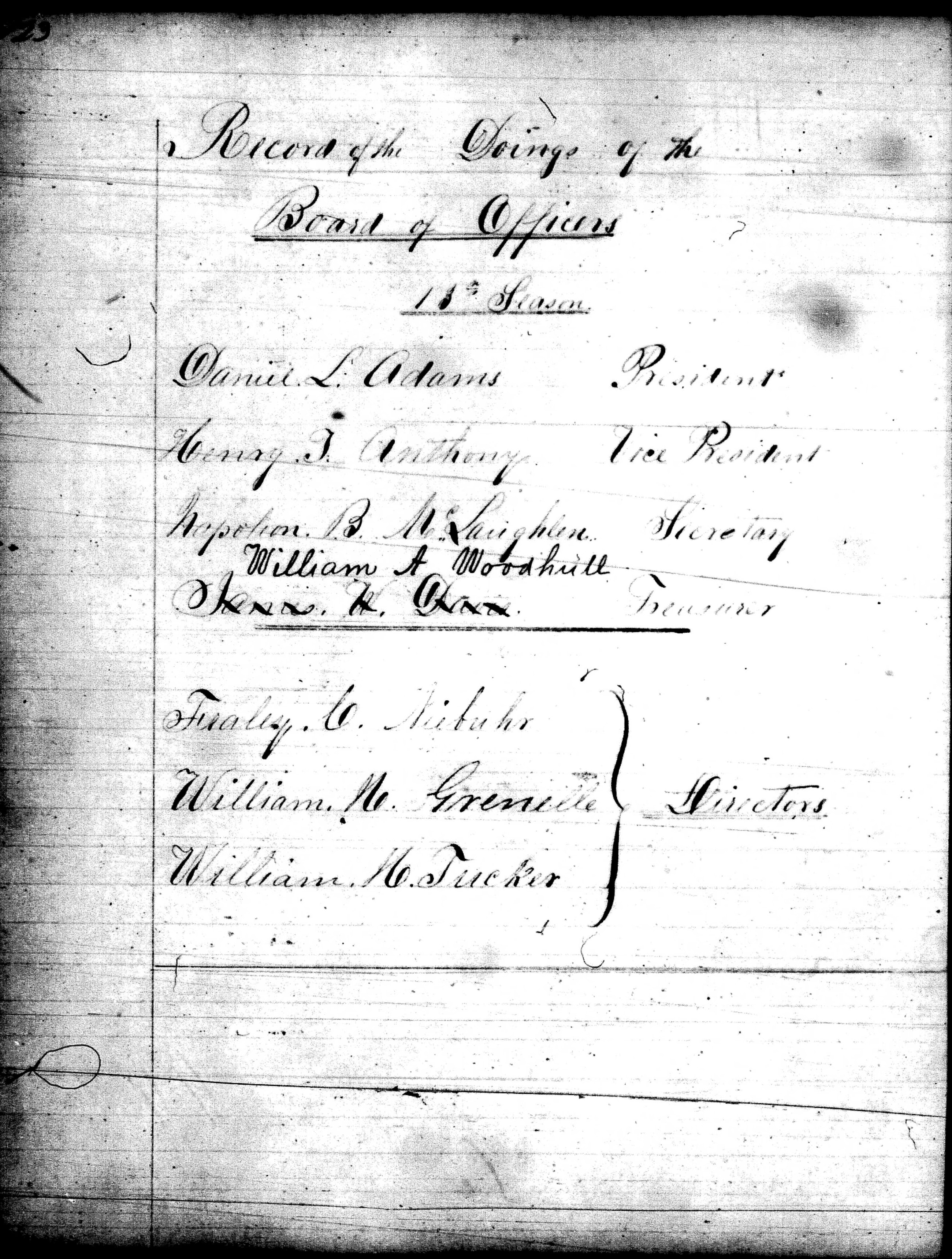
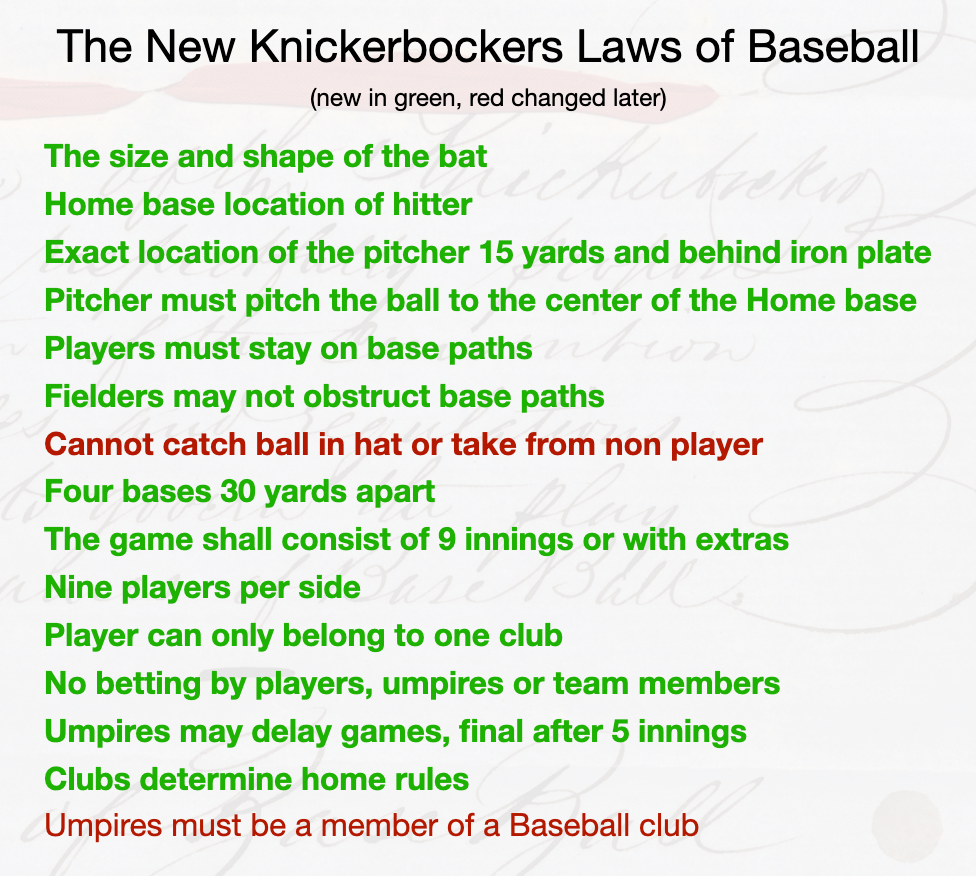
A twenty-one-page scholarly analysis of the Laws of Baseball — examining each provision in historical context, tracing the development of the rules from the Knickerbocker Club's early experiments to the 1857 Convention, and establishing Adams' authorship through documentary evidence.
Page 1
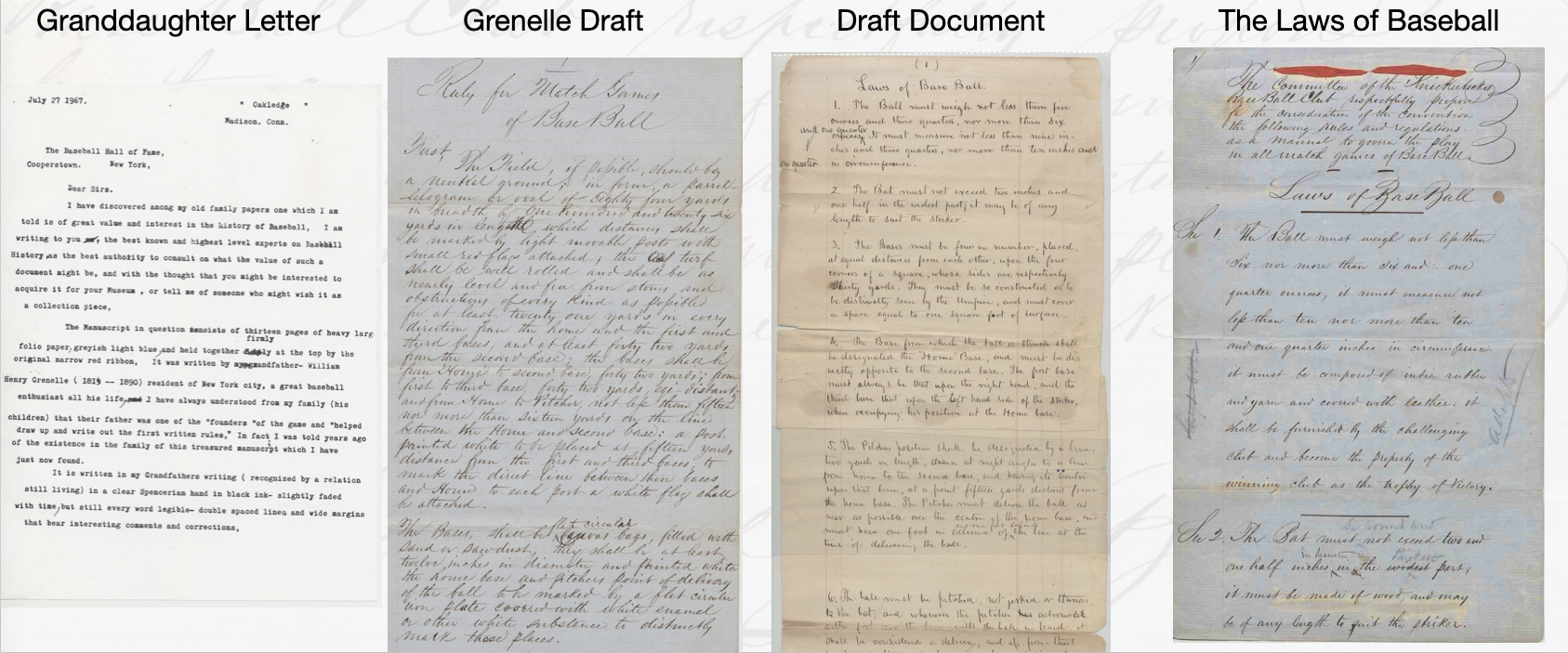
Page 2
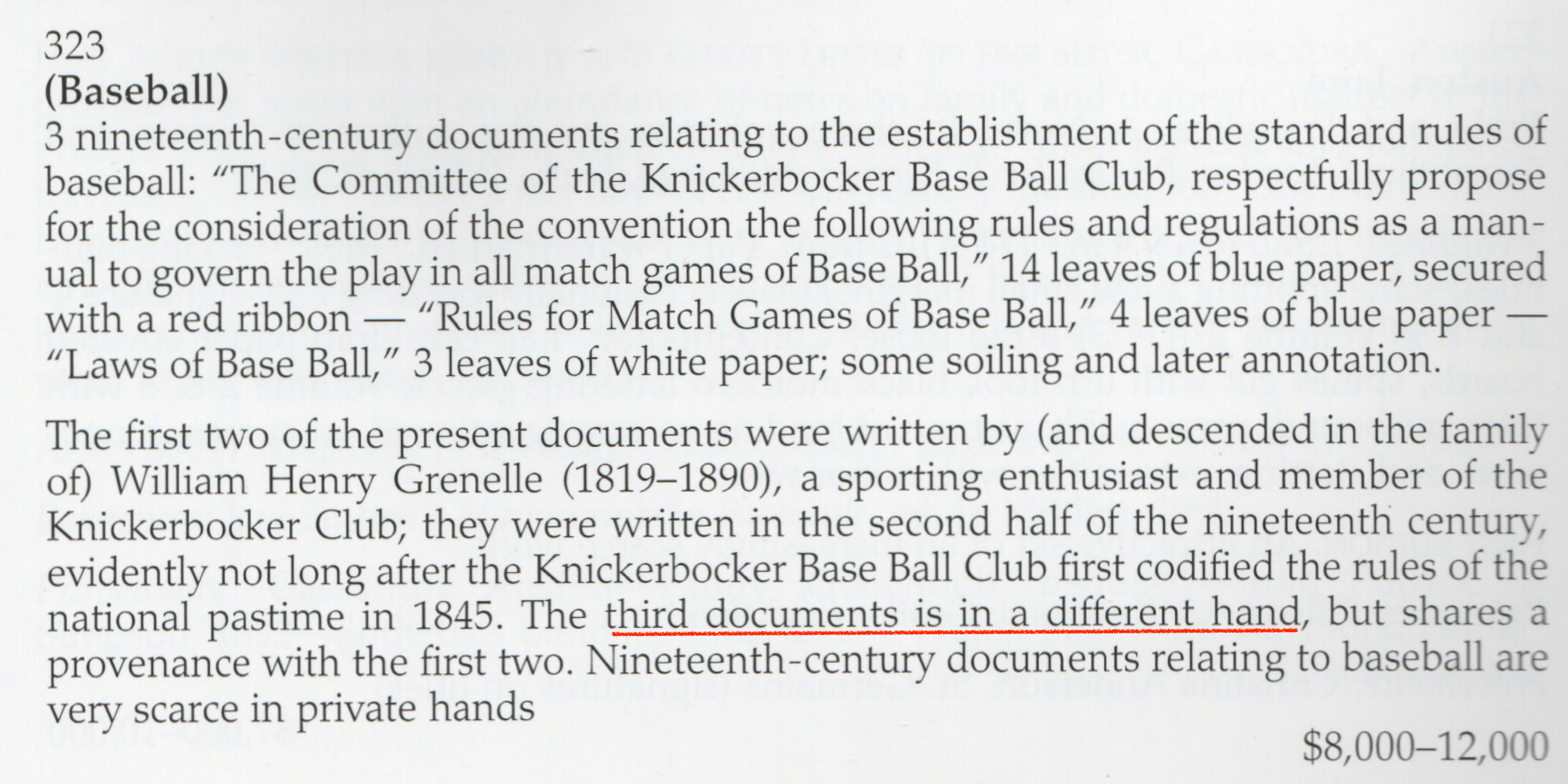
Page 3
Page 4
Page 5
Page 6
Page 7
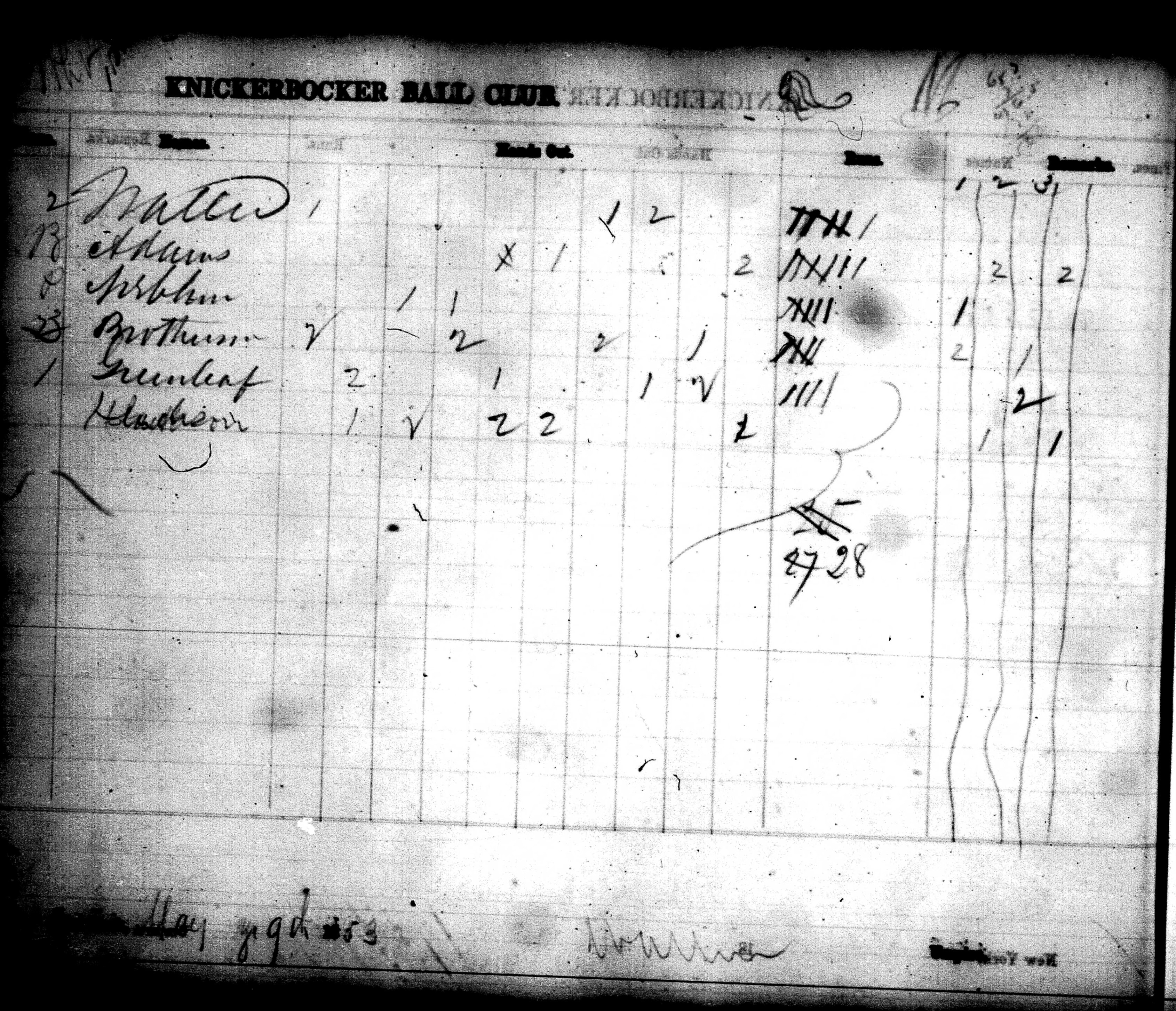
Page 8
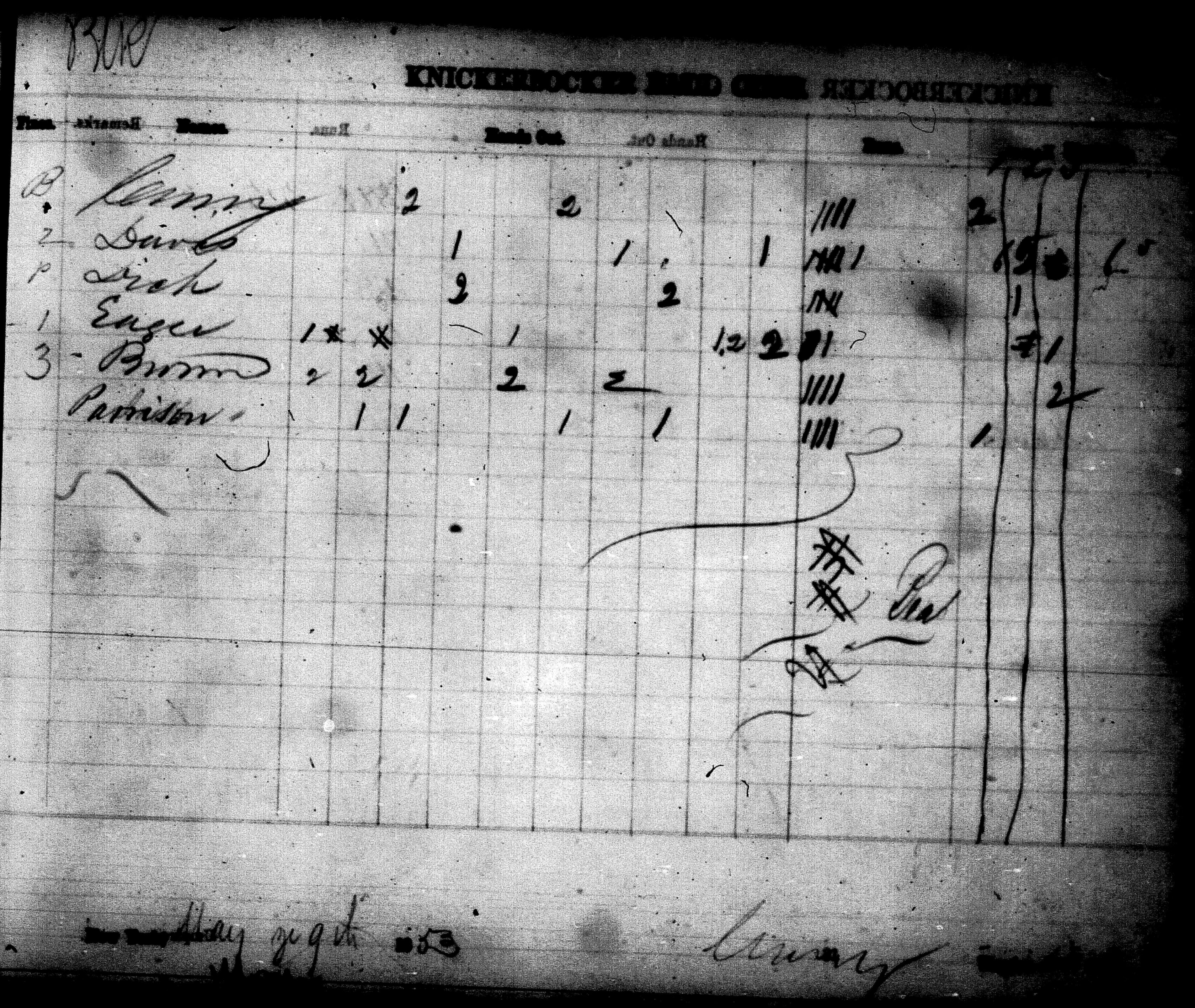
Page 9
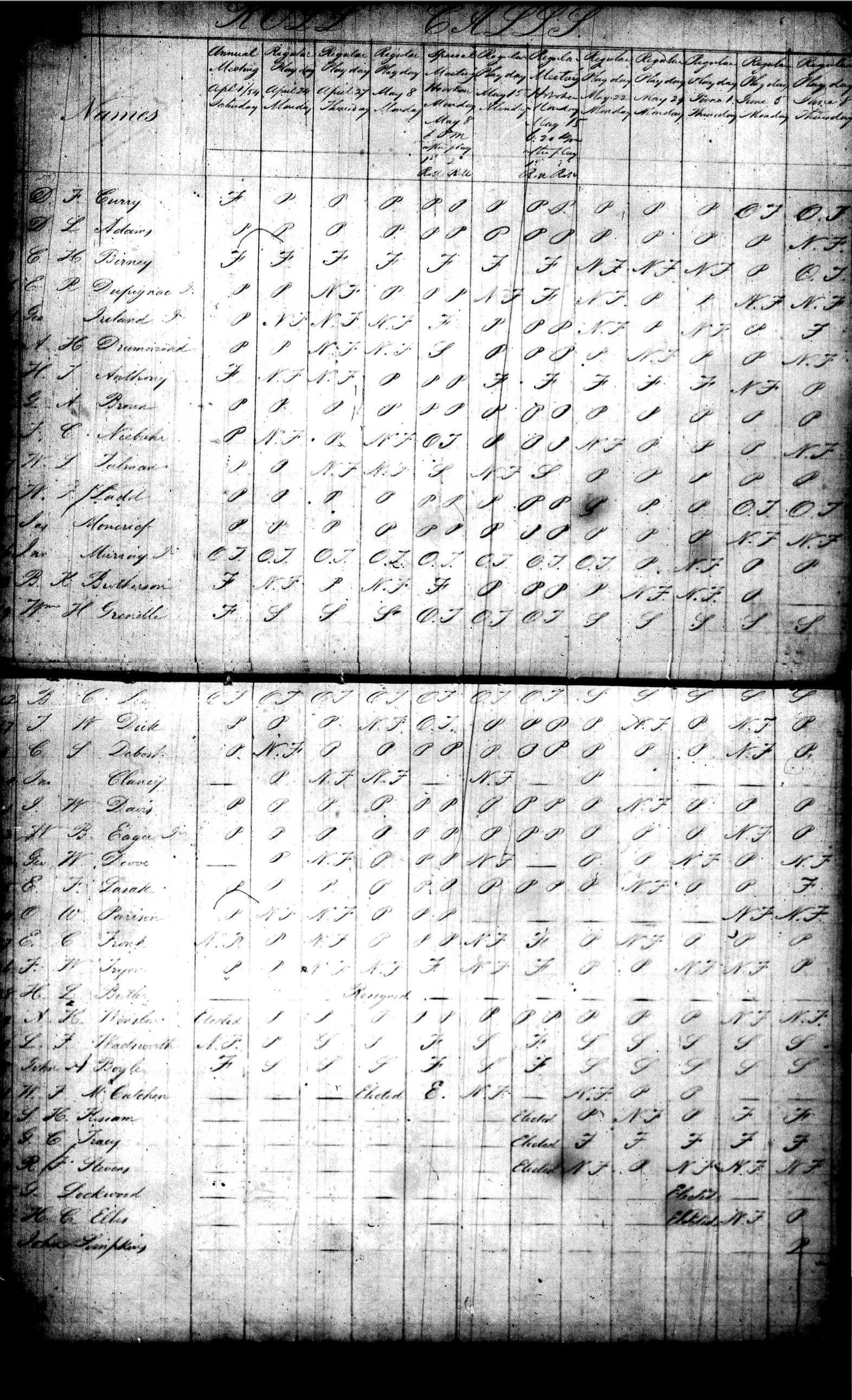
Page 10
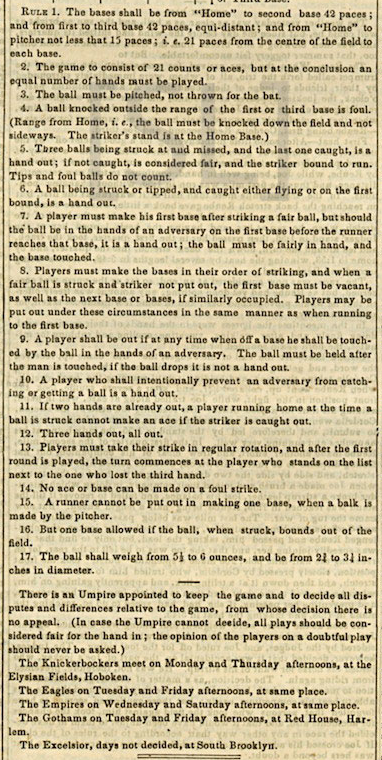
Page 11
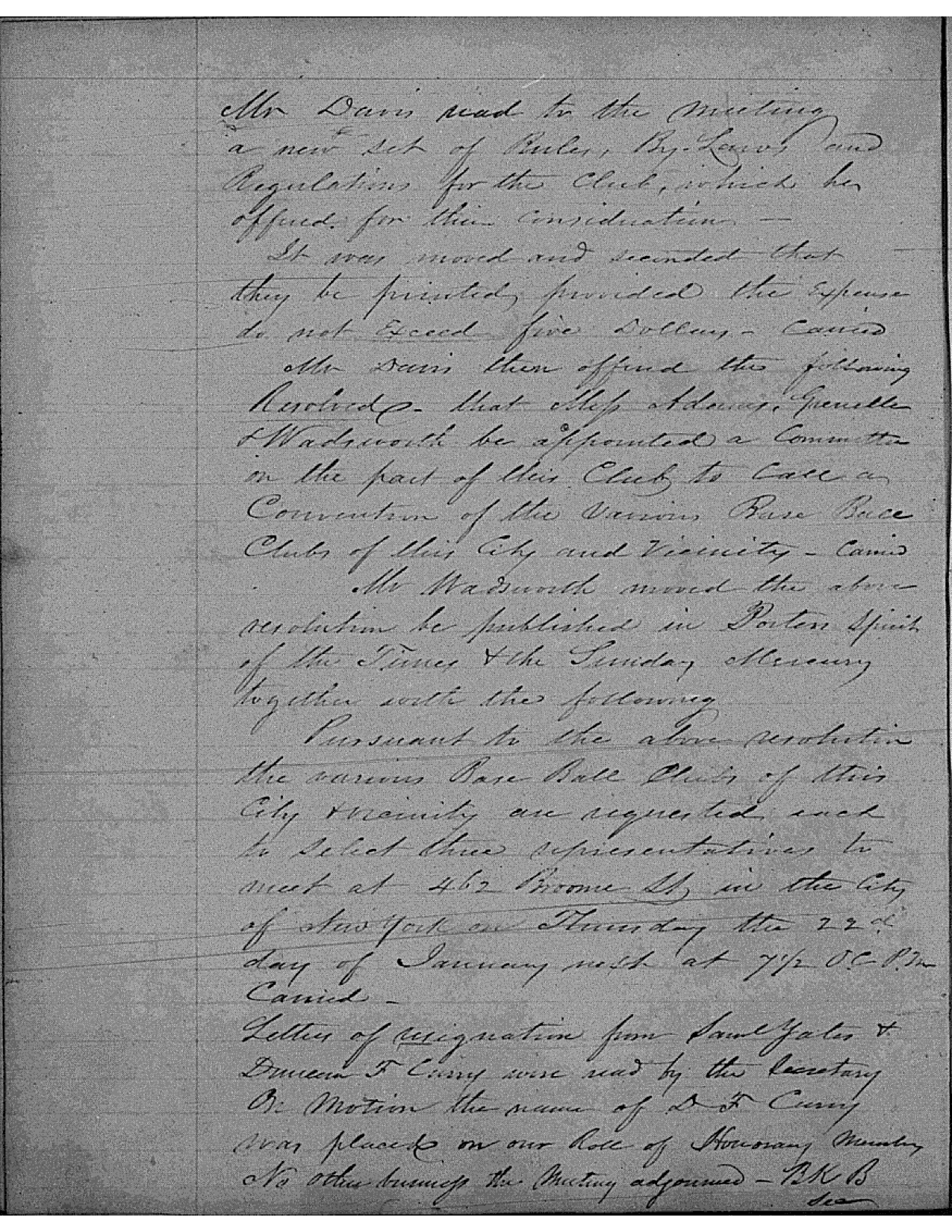
Page 12
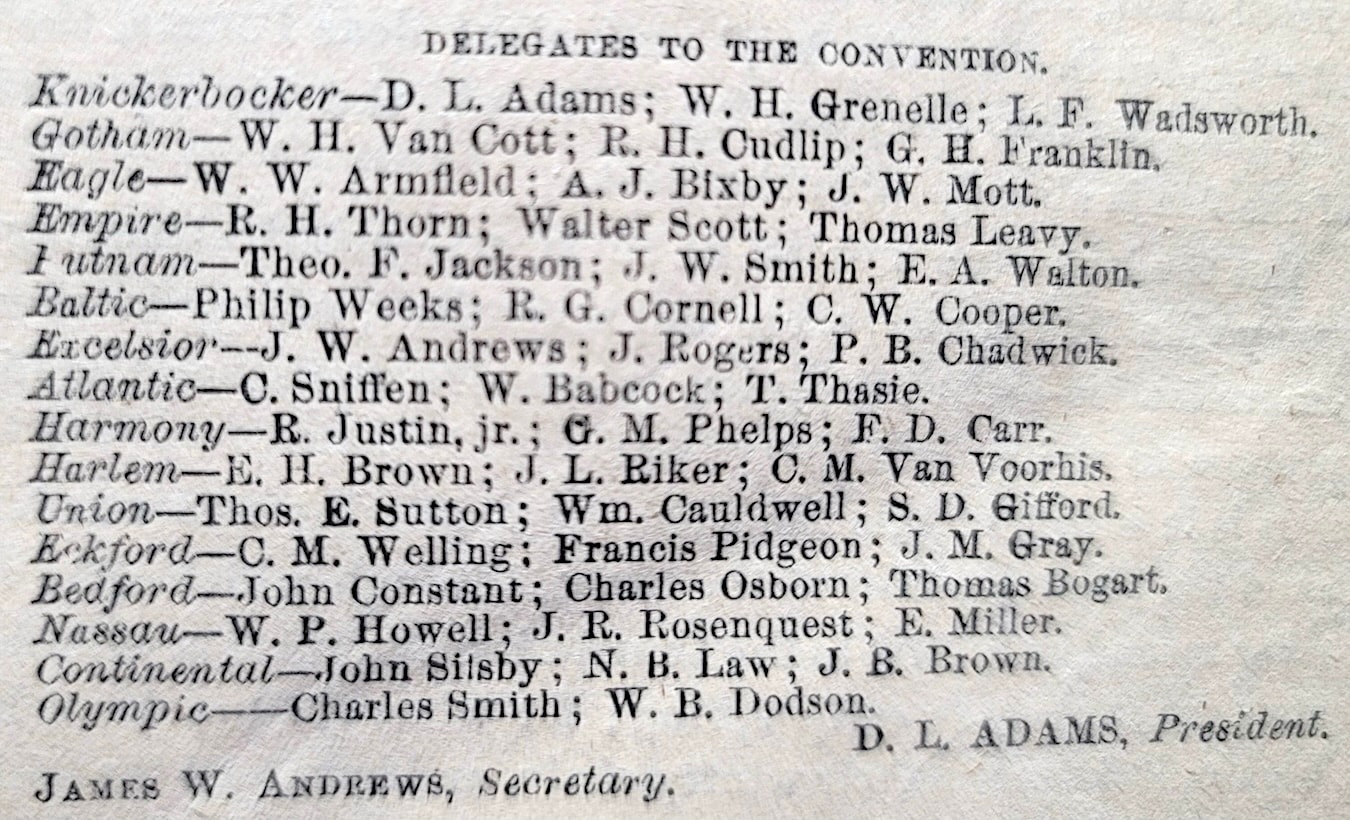
Page 13
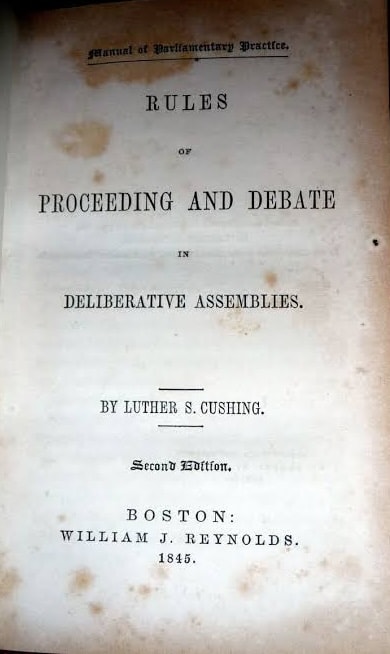
Page 14
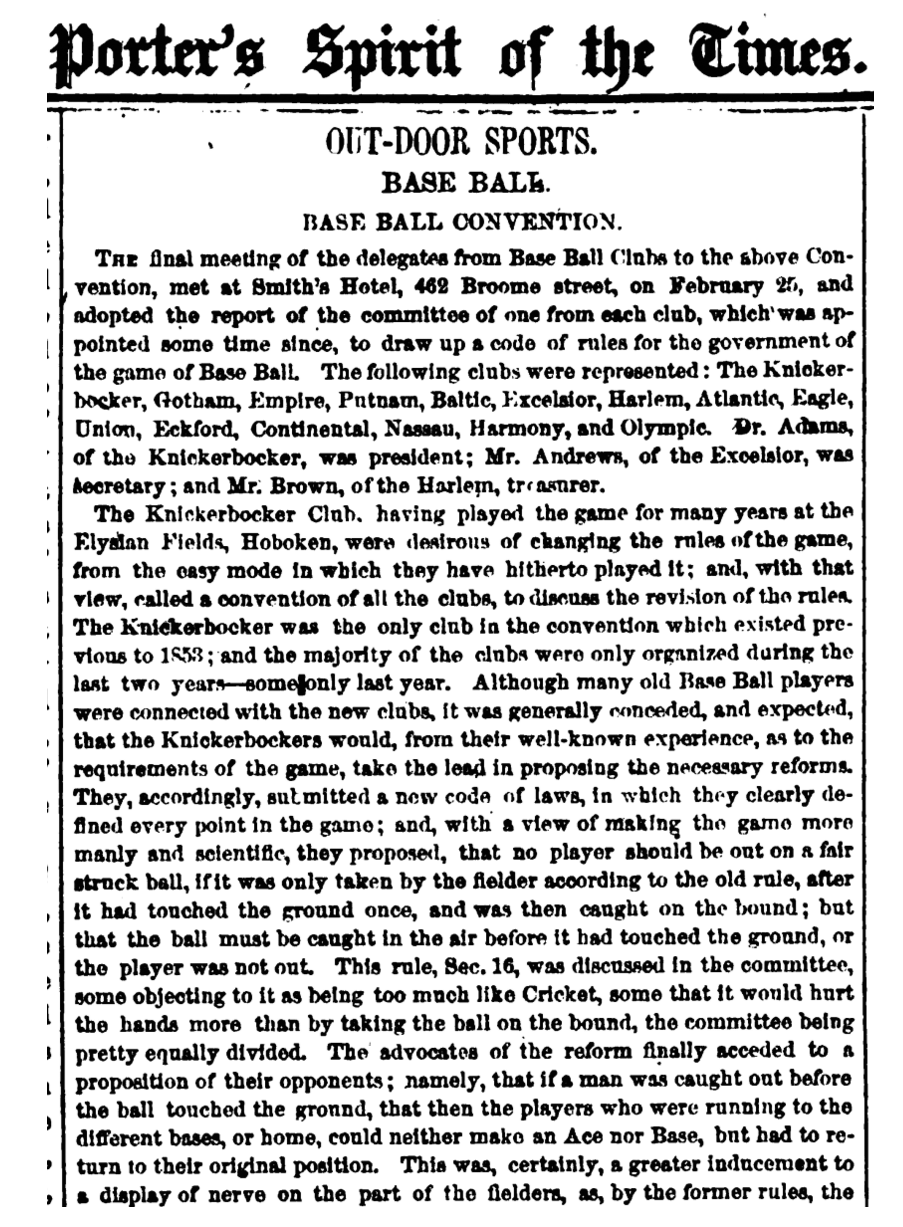
Page 15
Page 16
Page 17
Page 18
Page 19
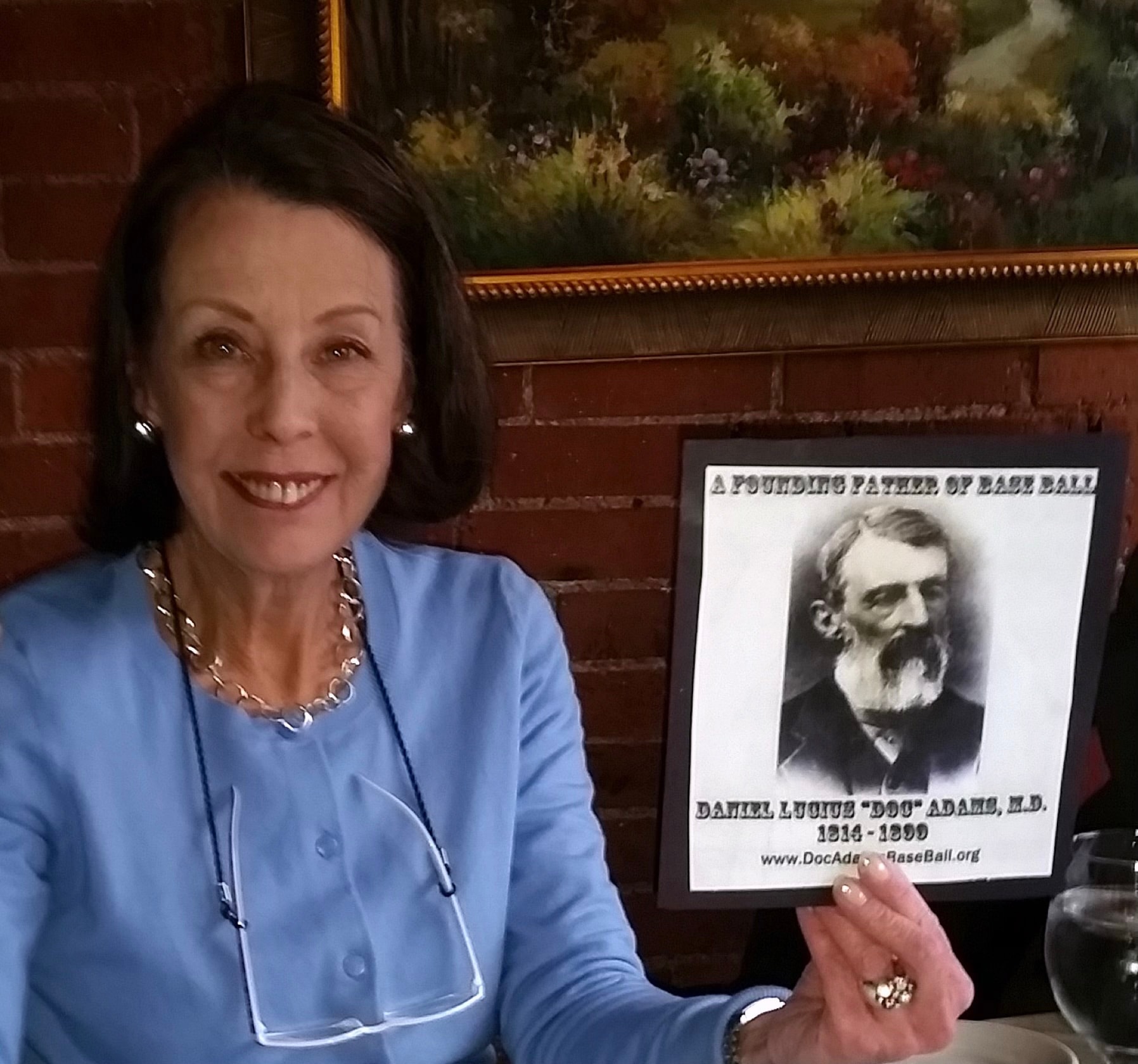
Page 20

Page 21
Historical Context
About These Documents
The Laws of Baseball were presented at the first Baseball Convention held in New York City in January 1857. Fourteen clubs sent representatives. The convention's purpose was to create a single, unified rulebook that all clubs would adopt.
The document presented by Adams was the result of years of informal rule development within the Knickerbocker Club — the oldest organized baseball club in America.
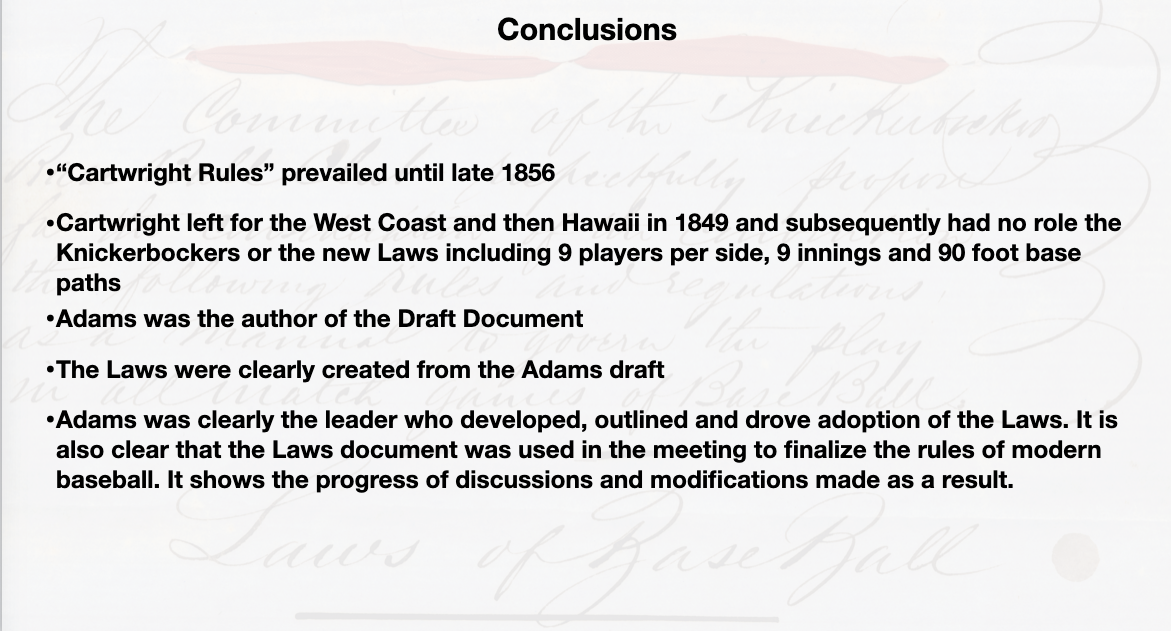
For over 150 years, the authorship of these laws was attributed variously to Alexander Cartwright or left unattributed. The 2015 research definitively identified Adams as the primary author through cross-referencing convention minutes, club records, and contemporary accounts.
These pages are presented here as the primary evidence of that authorship — the same documents that were used in the 2015 identification.